How It Shows Up
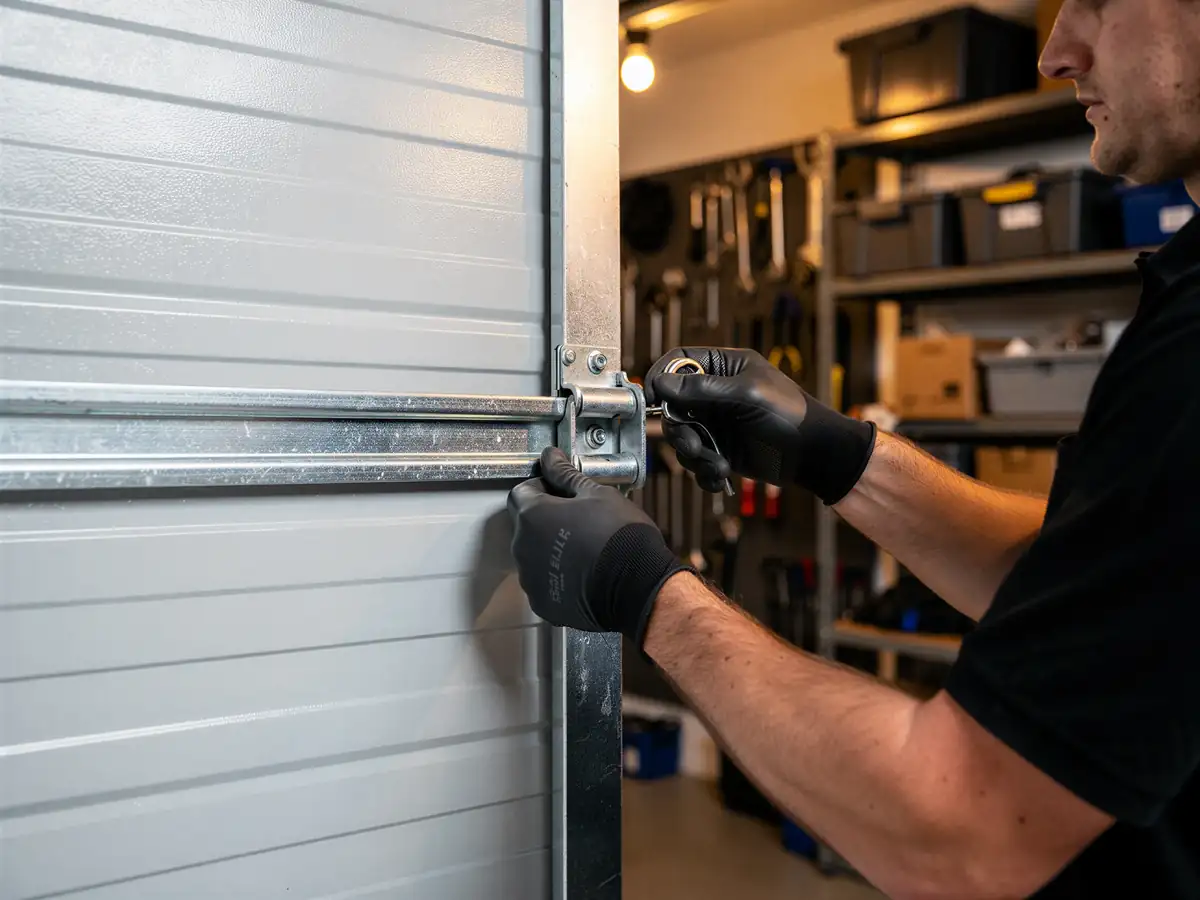
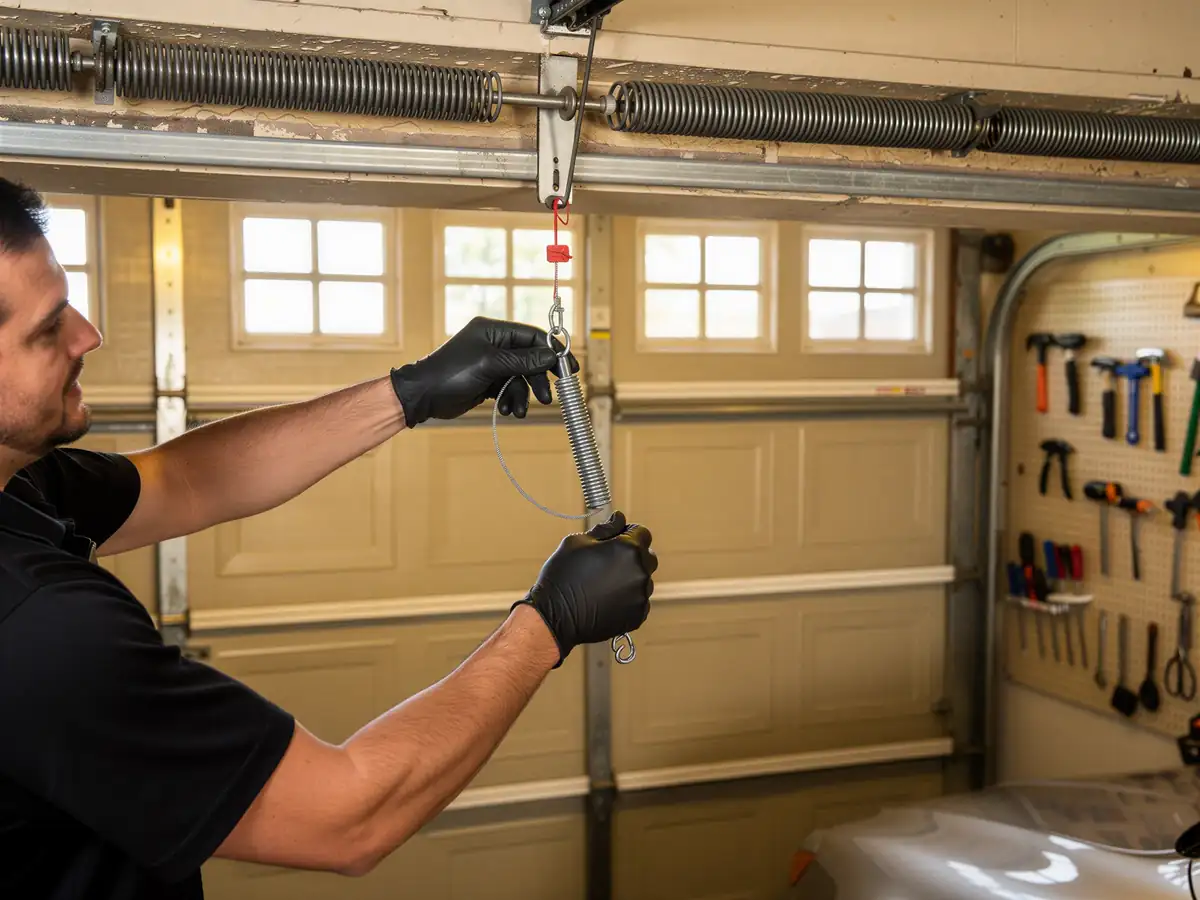
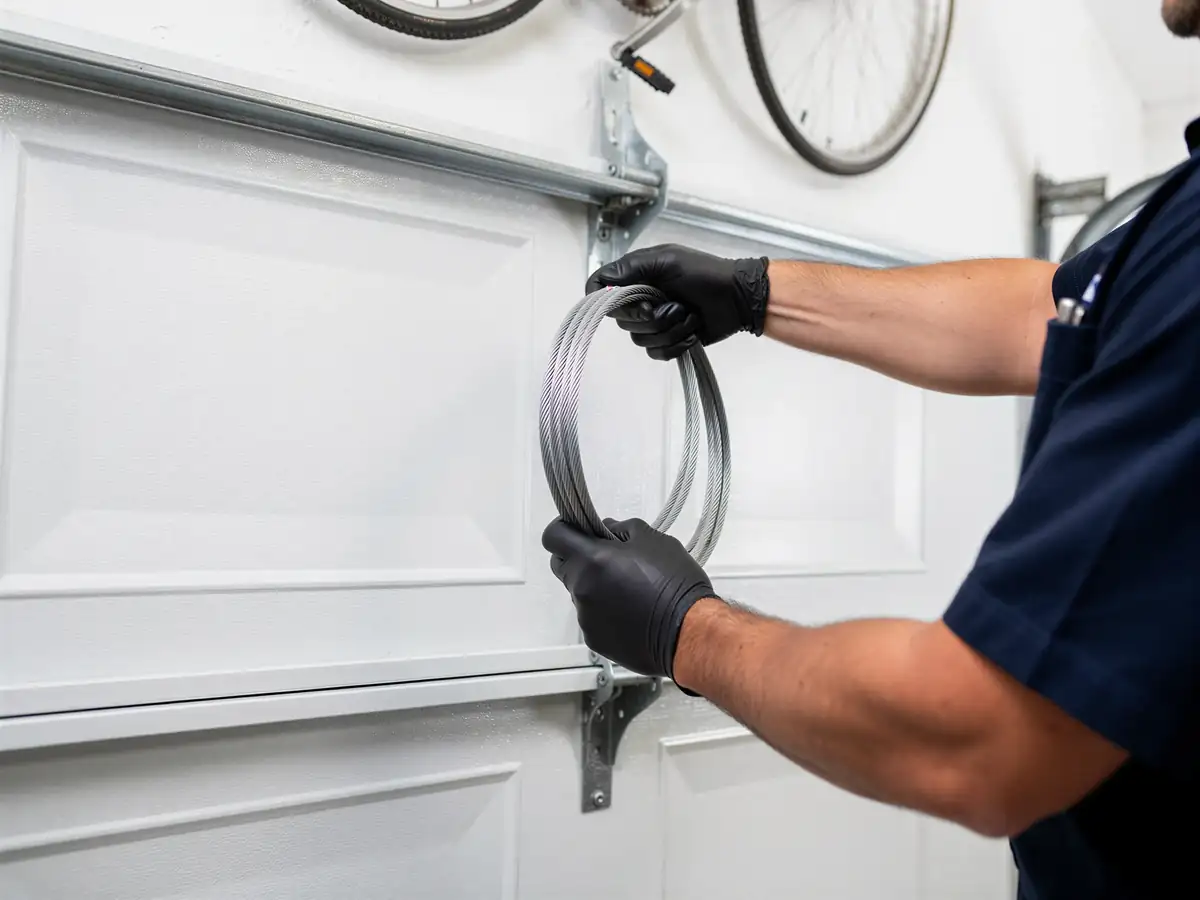
The first sign is almost never a full snap. It's a door that drops unevenly, tilting a few inches lower on one side as it comes down, or a loud bang followed by the door refusing to move at all. Sometimes you'll see the cable itself - a cluster of thin wire strands fraying off the main line near the bottom bracket, long before the whole thing lets go.
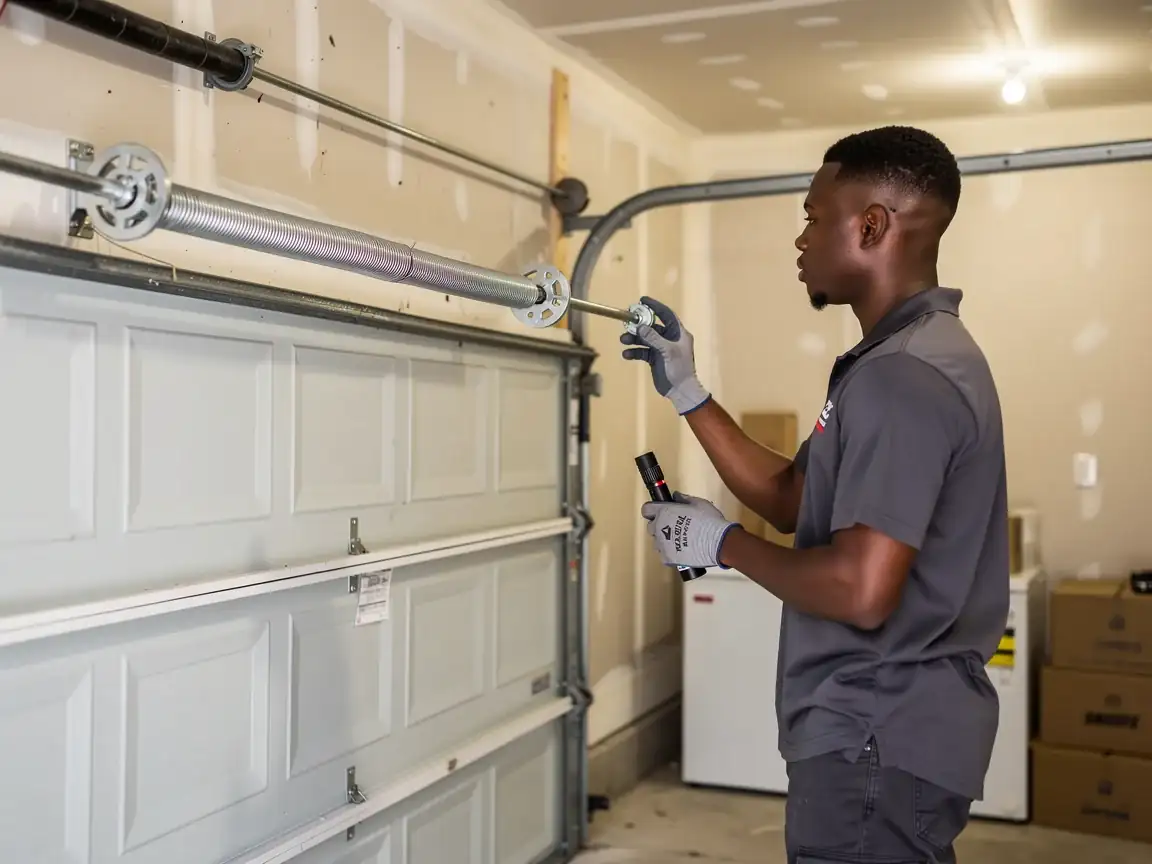
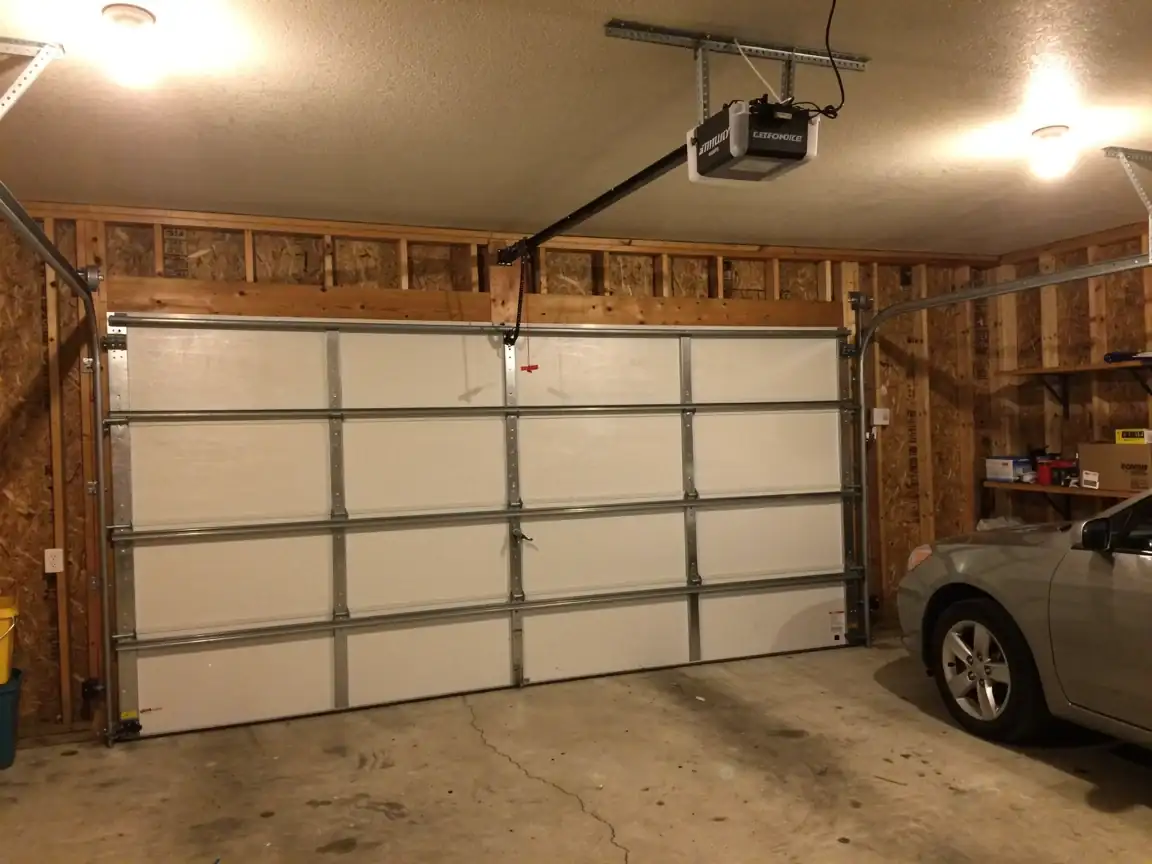
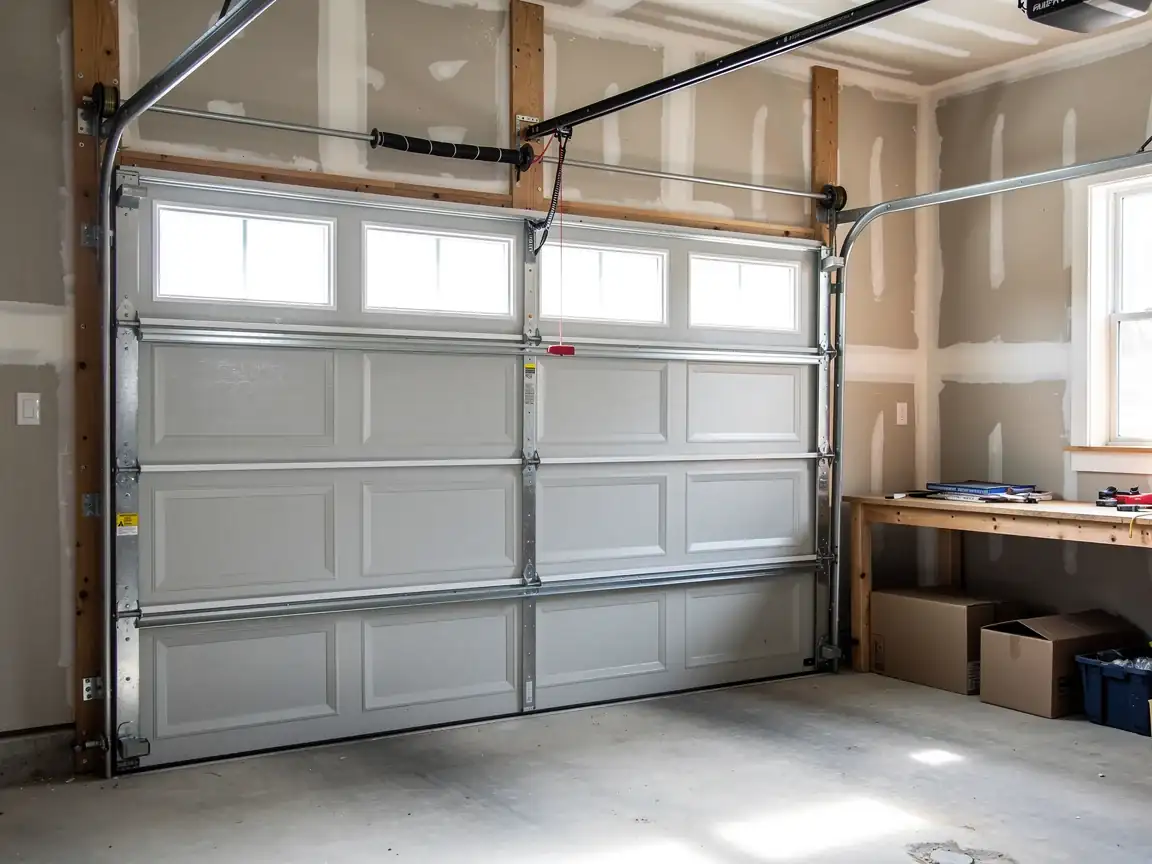
Most houses in Johnsburg went up around 1986, which puts the garage doors here squarely in the torsion-spring era, with steel lift cables running off a cable drum at each end of the torsion bar rather than the older extension-spring setups you'd find on houses built decades earlier. That hardware is solid, but thirty-plus years of winters means the cable's protective coating is long gone on most of these doors, and bare steel wire under constant tension is what frays first.
If your door moves crooked, or one cable looks slack while the other is taut, stop opening and closing it. A cable that's partway gone can finish failing on the next cycle, and when it does, the sudden shift in tension can bend the track or drop the door hard.
What Can Go Wrong
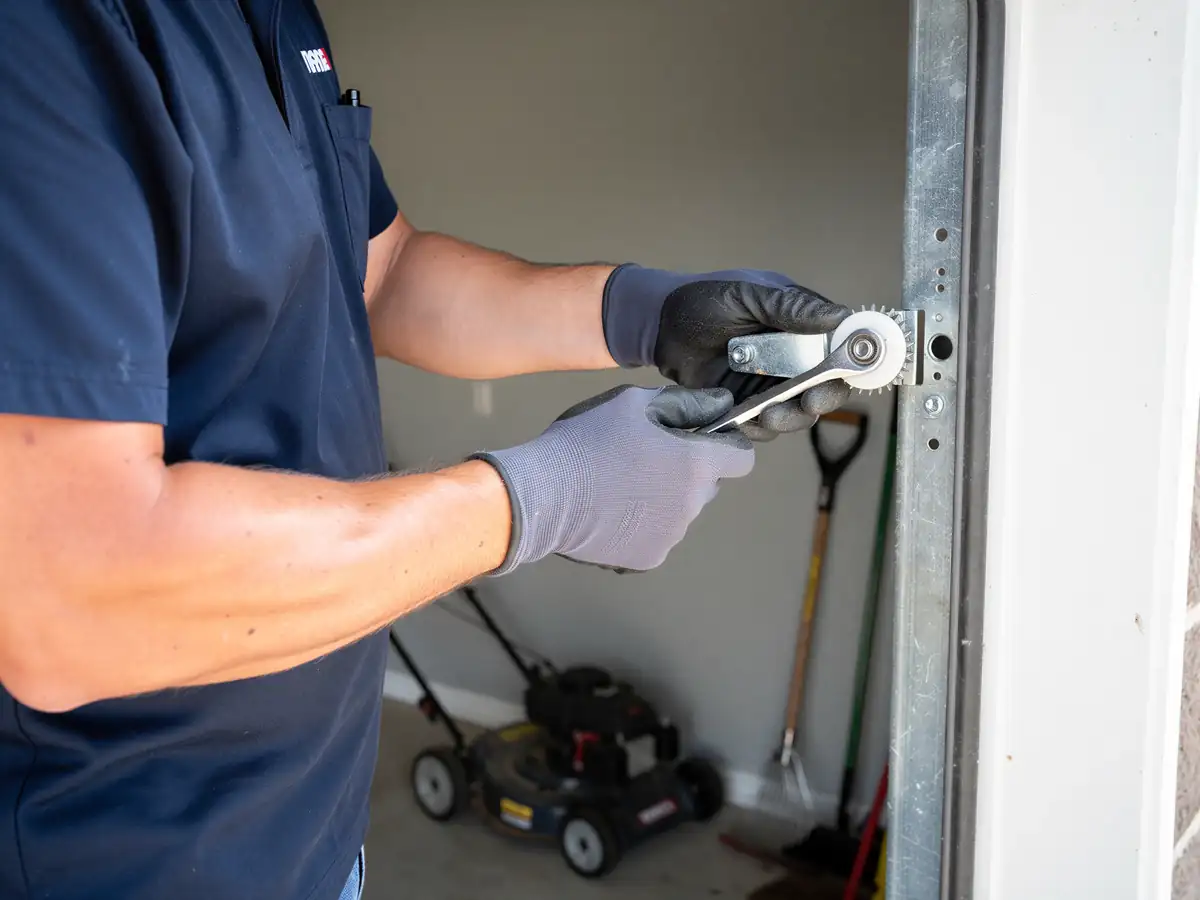
A fully snapped cable is the obvious failure, but it's not the only way this goes wrong. A cable can jump off its drum without breaking, usually from years of minor misalignment, and then bind or grind every time the door runs. On doors old enough to still have the original drums, the drum grooves themselves wear down unevenly, which lets the cable walk sideways until it eventually rides off the edge.
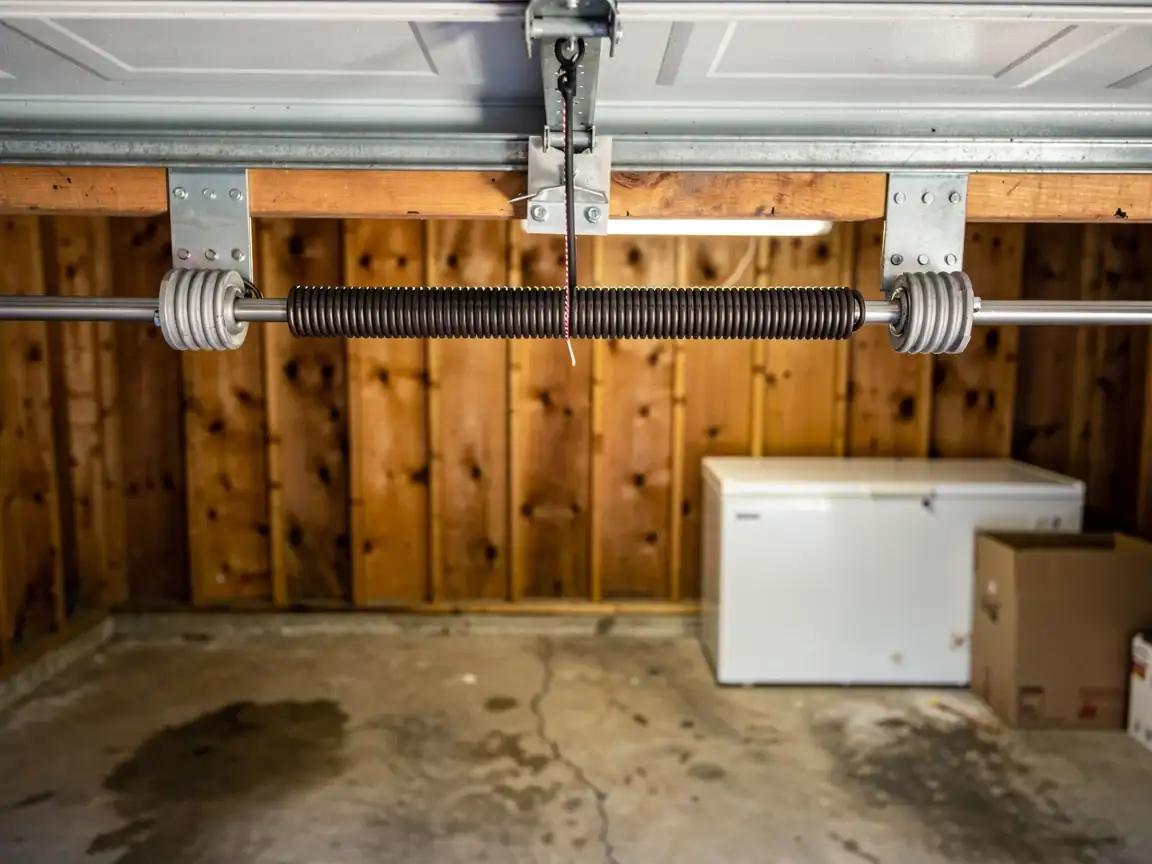
The other failure mode is more dangerous than it looks: a cable that's frayed but not fully broken, still under the full load of a wound torsion spring. That spring doesn't know the cable is compromised - it's still pulling with the same force, and when the last few strands give, the slack end can whip. This is the point where a repair stops being a weekend project and becomes a job for someone used to working around loaded springs.
On two-car doors, it's common for only one side to show visible damage while the matching cable on the other end is close behind it in age and wear. Replacing one and leaving its twin is a short-term fix at best.
Doing It Yourself
Swapping a garage door cable is mechanically simple
Unbolt the old one, run the new one through the drum, tension it back up. The part that trips people up, and the part that actually gets people hurt, is the torsion spring sitting above it, wound tight enough to lift a few hundred pounds of door. Releasing or holding that tension with winding bars, without having done it before, is where most DIY cable jobs go sideways.
If you're comfortable with winding bars and you've done this before
A basic cable swap on a standard torsion setup isn't out of reach. If you haven't, this is one repair where the honest advice is to not learn on a loaded spring. We'd rather get a call for a ten-minute job than a call after someone's improvised a fix that failed halfway through.
What you can safely do yourself
Check both cables for fraying with the door closed and the opener disconnected, and note whether the wear looks even on both sides or concentrated on one. That tells whoever comes out whether it's a single-cable job or a pair.
Why This Fails Locally
This area sits in a cold-climate band, and that matters more for cable life than people expect. Steel cable doesn't rust from rain so much as it work-hardens and fatigues from repeated flexing in cold temperatures, which is exactly what a garage door cable does every single cycle through a Johnsburg winter. Add in road salt tracked in on car tires and undercarriages, sitting on a garage floor near where the cable runs past the bottom roller, and you get corrosion starting from the inside strands out, invisible until the outer wire finally gives.
With roughly 2,349 households in Johnsburg, the housing here tends to have gone in during the same general building push, which means a lot of these doors are hitting cable fatigue age in the same stretch of years rather than one at a time scattered across decades. At four miles from McHenry, there's no logistics reason a cable swap here should take longer than one anywhere else we cover - it's close enough that parts and timing aren't the bottleneck, the spring tension and cable condition are.
How to Book
We run cable repair calls out of McHenry, and Johnsburg is a short trip from there - about four miles, so getting a truck to your address isn't the hold-up on this job. Describe what you're seeing: which side looks slack, whether the door moved crooked before it stopped, and whether you heard a bang. That's enough for us to bring the right gauge cable and drums rather than guessing on-site.
If you're not sure whether it's a cable or something else in the system, our Johnsburg garage door repair page covers the other common failures we see on doors from this area. For more on how we handle cable work specifically, including what's involved in a straightforward swap versus a full system check, see our garage door cable repair page for McHenry.
How Long It Takes
A cable swap on a standard double-torsion setup is usually one of the shorter jobs on the truck once the spring tension is safely released
Most of the time goes into confirming drum condition and making sure the replacement cable seats correctly, not the swap itself. Where it runs longer is when the drum or torsion bar has worn unevenly from years of a misaligned cable, which we do see on hardware that's been running since the area's mid-1980s build-out.
A $106,827 median income here means most owners we talk to would rather replace both cables and the drums in one visit than call back in six months for the second side
And that's usually the right call on a door old enough that one side failing is a sign the other isn't far behind. We'll tell you straight if that's overkill for your specific door - sometimes one side really is fine.