Serving McHenry, IL & nearby
(815) 247-0970
McHenry, IL

When It's Time to Stop Fixing and Start Replacing

Most McHenry garage doors date to the 1980s-90s boom years and were built for a milder cold rating than what the area sees now. Here's when fixing stops making sense.

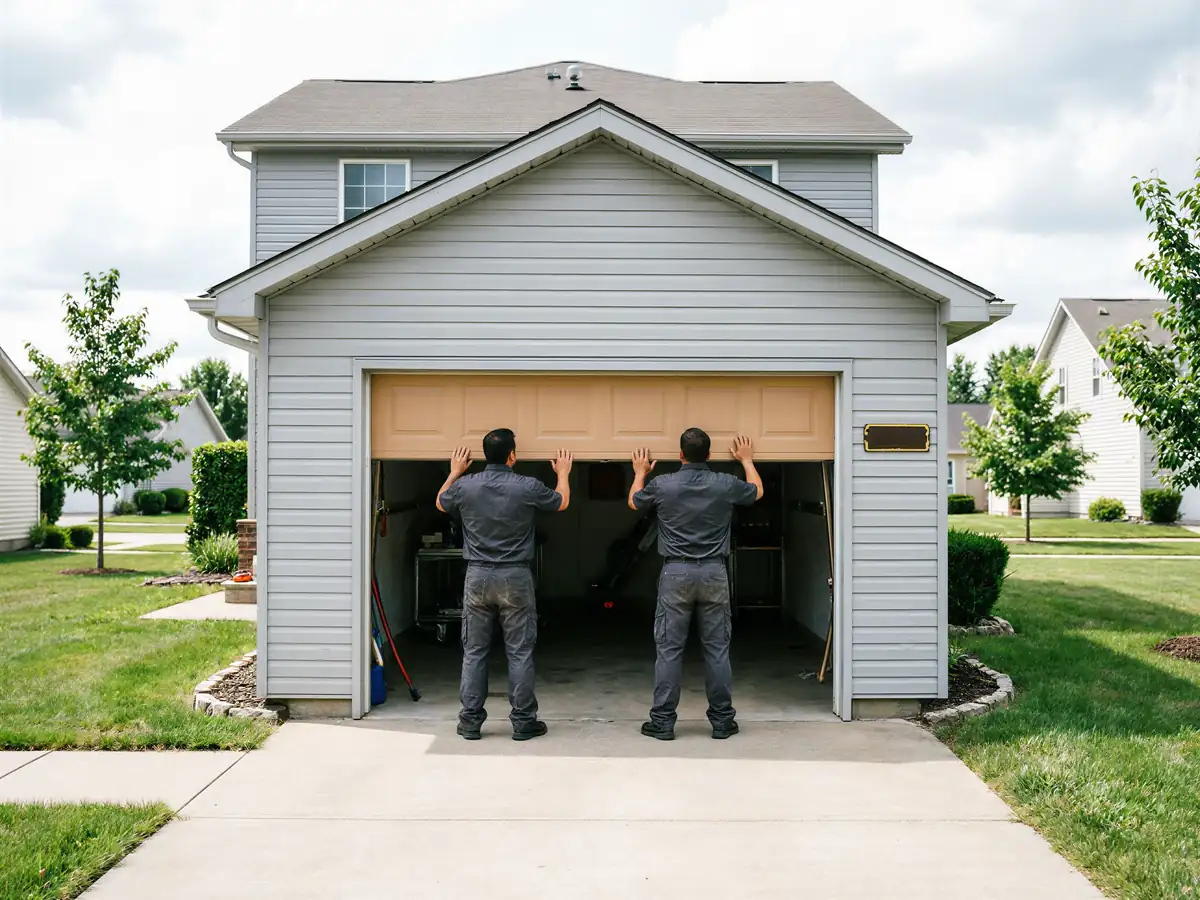
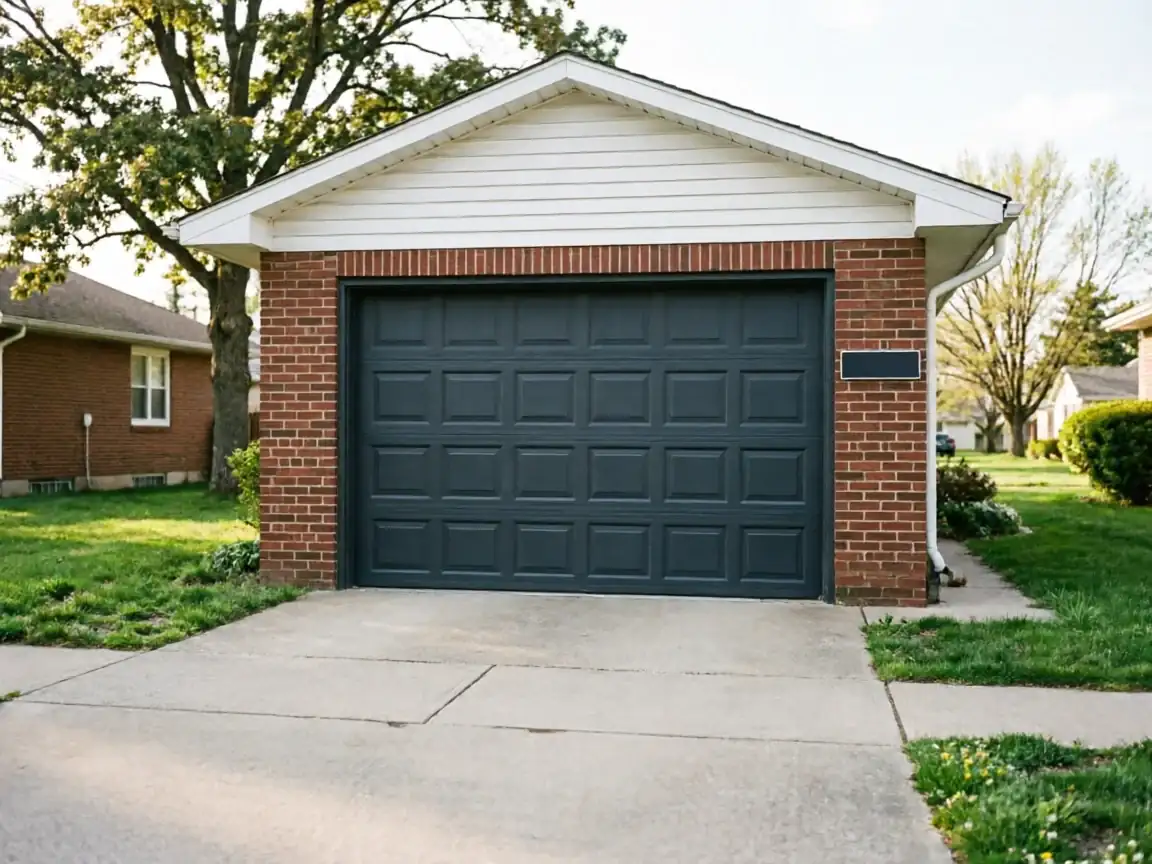
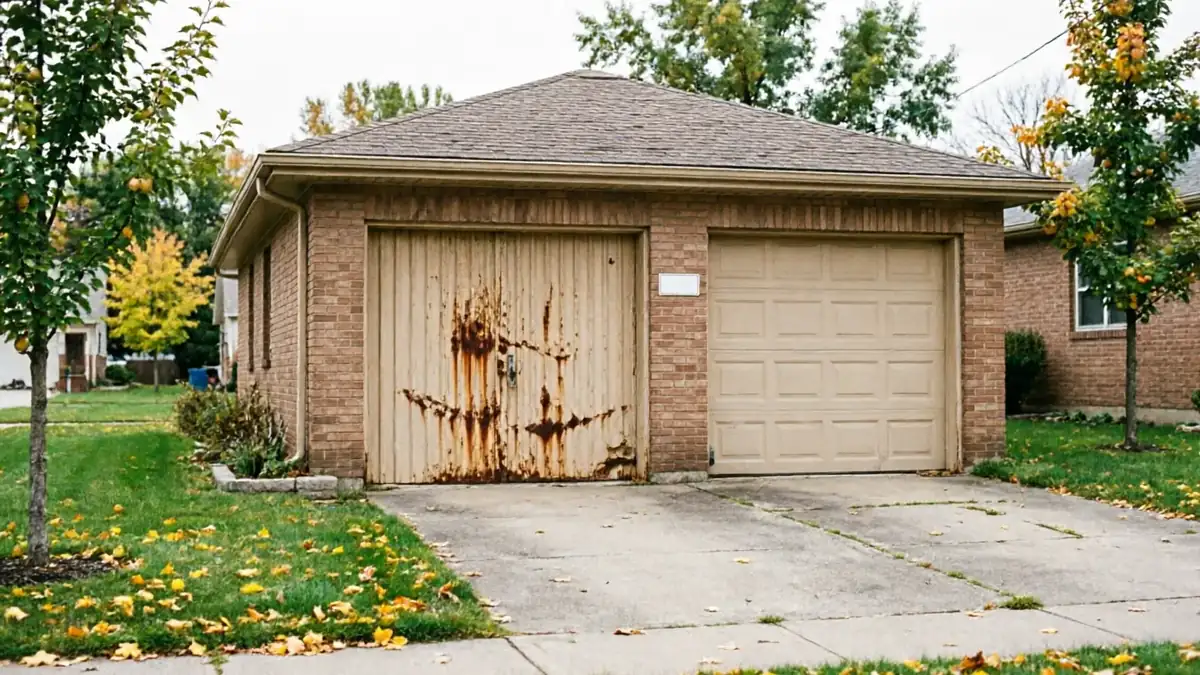
A two-car garage has one rusty door and one clean beige door.

When It Stops Being a DIY Job

A lot of homeowners in McHenry start with a YouTube video and a tube of lubricant, and that's fine for a squeaky roller or a loose hinge bolt. It stops being a DIY job the moment you're touching the torsion spring system or the cables under tension. Most of the housing stock here went up between 1946 and 2009, with the bulk landing in the 1980s and 90s, and doors from that era commonly run on torsion springs sized for the original door weight - not whatever panel got swapped in later if a previous owner replaced the door without matching the spring. If the spring has already let go, or a cable has jumped the drum, that's a call to a tech, not a weekend project. The honest limit: we don't walk someone through spring replacement over the phone, because a torsion spring under load has put people in the ER. If you can operate the door safely with the opener disconnected and nothing is grinding, binding, or sagging on one side, you're still in safe-to-wait territory. Past that, stop turning wrenches and start making a call.

What Local Conditions Do

McHenry sits in a cold-severe climate band, and that matters more for a 1980s-vintage door than people think. Steel sections from that build era typically carry thinner gauge and less insulation than anything made today, so repeated freeze-thaw cycling works the weak points: seams, the bottom seal track, and especially the rollers and hinges that flex every time the door moves through a cold start. A door that's fought thirty-plus winters of that cycling doesn't fail gracefully - it fails at the hinge where metal fatigue has already thinned the material. Parts for doors built in that 1987 median window are also getting harder to source exactly matched, since manufacturers have changed track widths and panel profiles since then. That's the real cost of an older door here: not that it breaks, but that fixing it means hunting down a part that may not be made anymore, or accepting a near-match that stresses the rest of the door unevenly.

Where People Go Wrong

The mistake we see most in this area is treating a torsion spring replacement as the end of the repair instead of a signal. If a spring breaks on a door built in that 1980s-90s stretch, the rest of the hardware - rollers, hinges, the opener's drive mechanism - has usually logged the same number of open-close cycles. Replacing just the spring on a 30-plus-year-old door often means the next failure, a hinge crack or a bent track, shows up within a year or two, not because the repair was bad but because everything else was due at the same time. The other common error is matching new panels to an old door frame that's shifted slightly out of square over the decades - common in homes built before the area tightened up its current energy and wind-load codes. A patched section on an older frame rarely seats the same way a full door does, and it shows up as a gap under the weatherstrip that lets cold air straight into the garage.

The Situation

With a median household income of $113,125 across the area and a large share of owner-occupied homes - 96,533 out of 156,361 households region-wide - most people here can choose replacement over repeated repair when the math makes sense, and for a door built before the 1990s, it usually does. We won't tell you to replace a door that's working fine just because it's old. But once you're past a third repair call on the same unit, or the hardware is original to a house built in that 1946-2009 window with no documented upgrades, you're paying repair labor on borrowed time against a door that was never built for today's insulation expectations or this area's winters. At that point a new door with modern seals and a matched spring system costs less over five years than another one-off fix.
How it works

From “it’s stuck” to “it’s fixed”

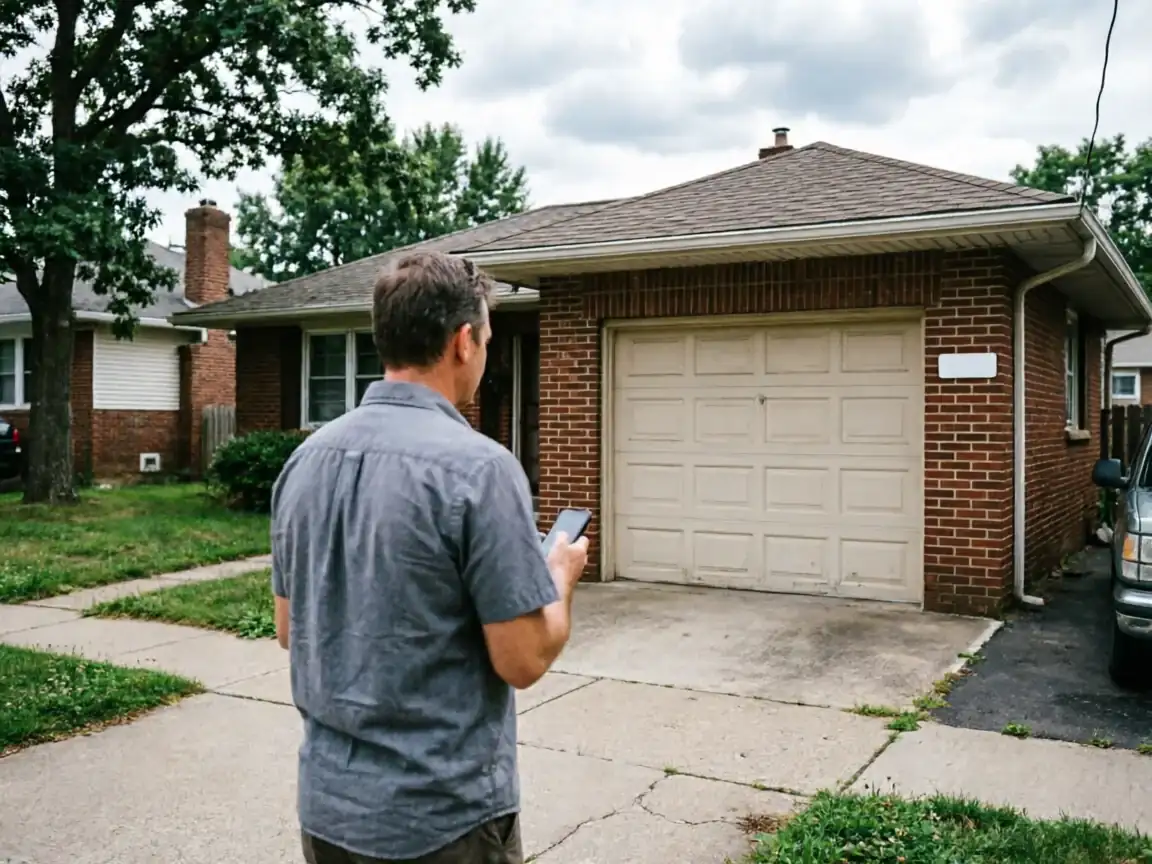
A technician stands on a driveway looking at a closed garage door.

Tell us what’s wrong

Describe the symptom - won’t open, loud bang, opener runs but the door won’t move.

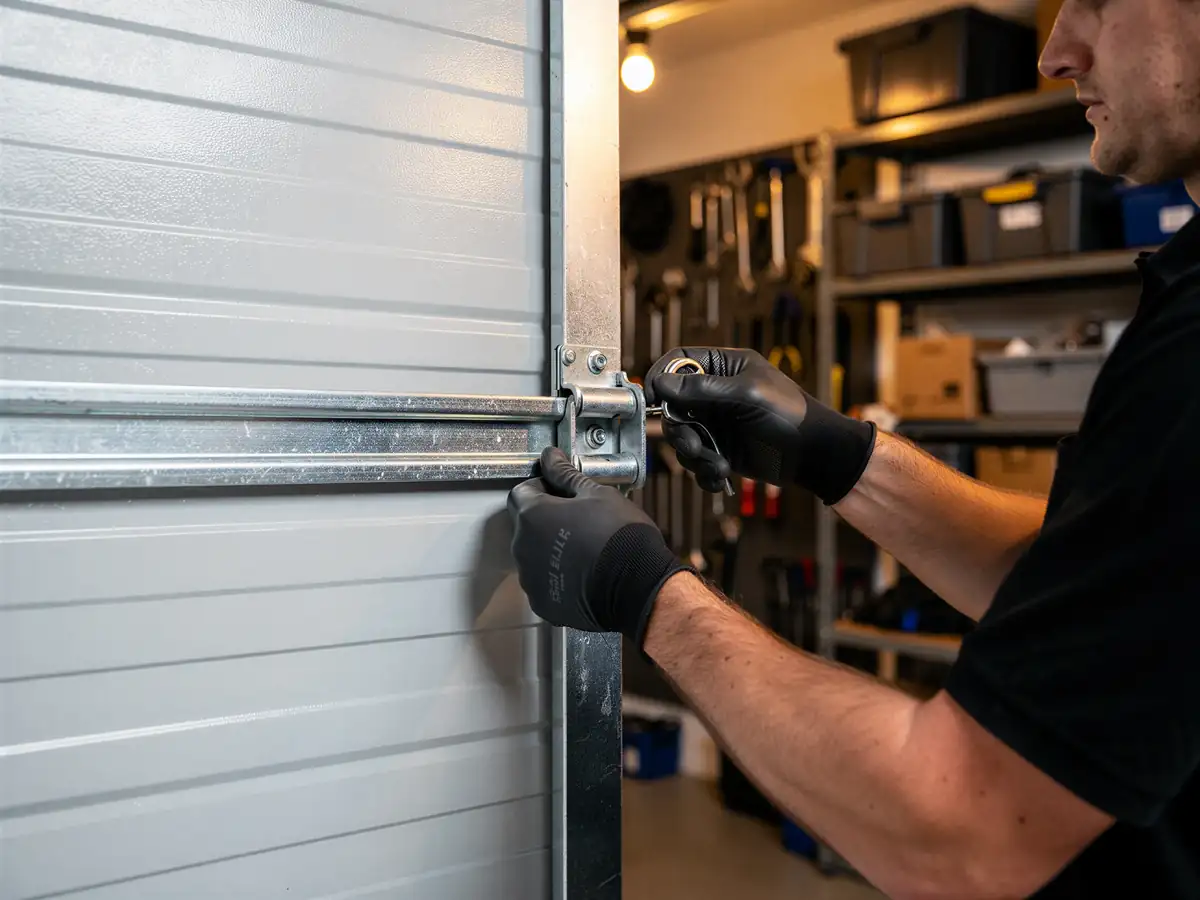
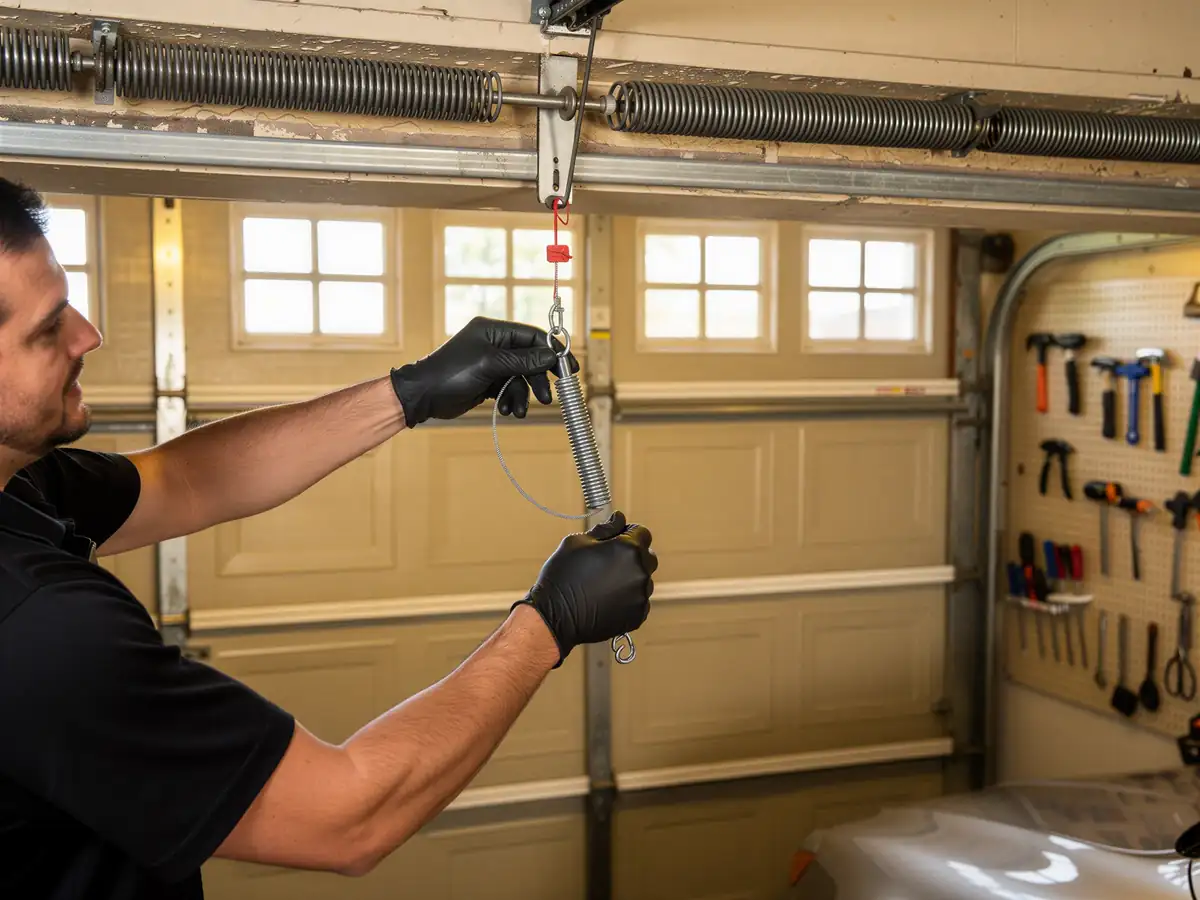
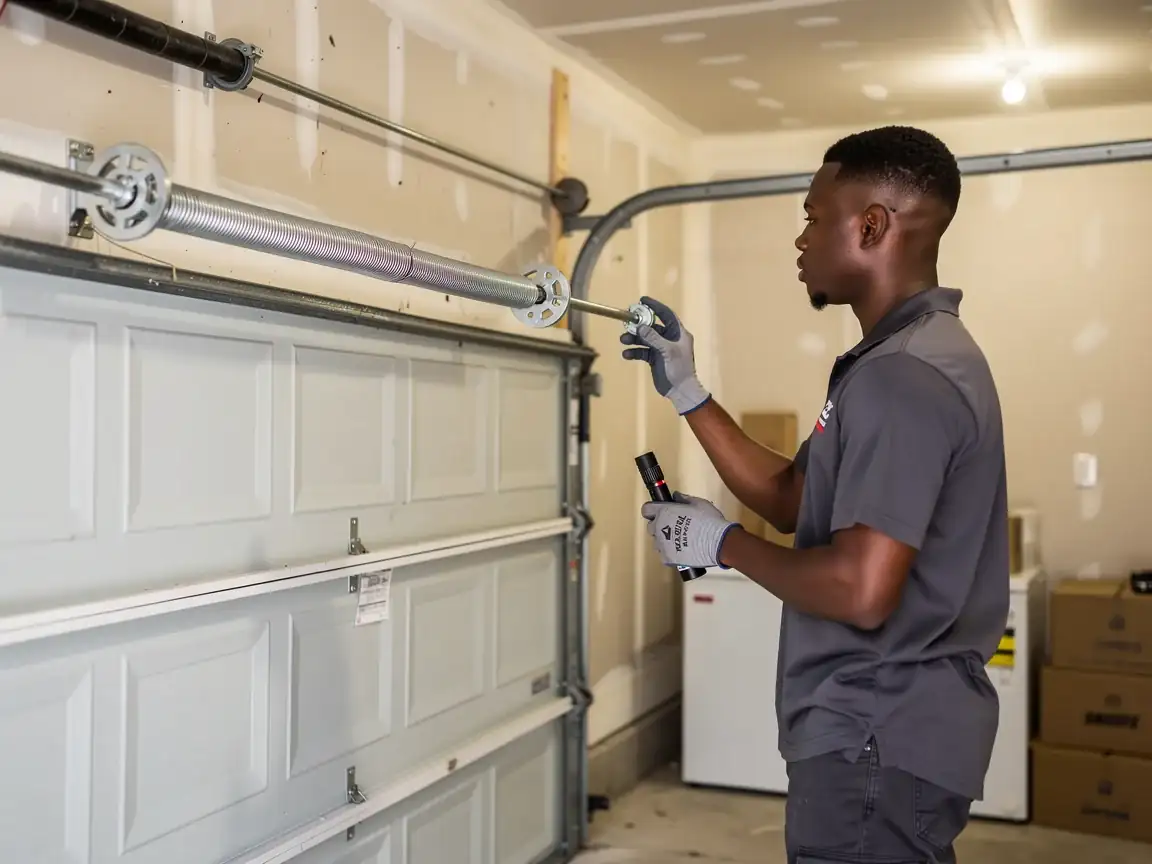
A technician is inspecting a garage door torsion spring and a white garage door.

On-site diagnosis

A technician tests the door under power and by hand and finds what actually failed.

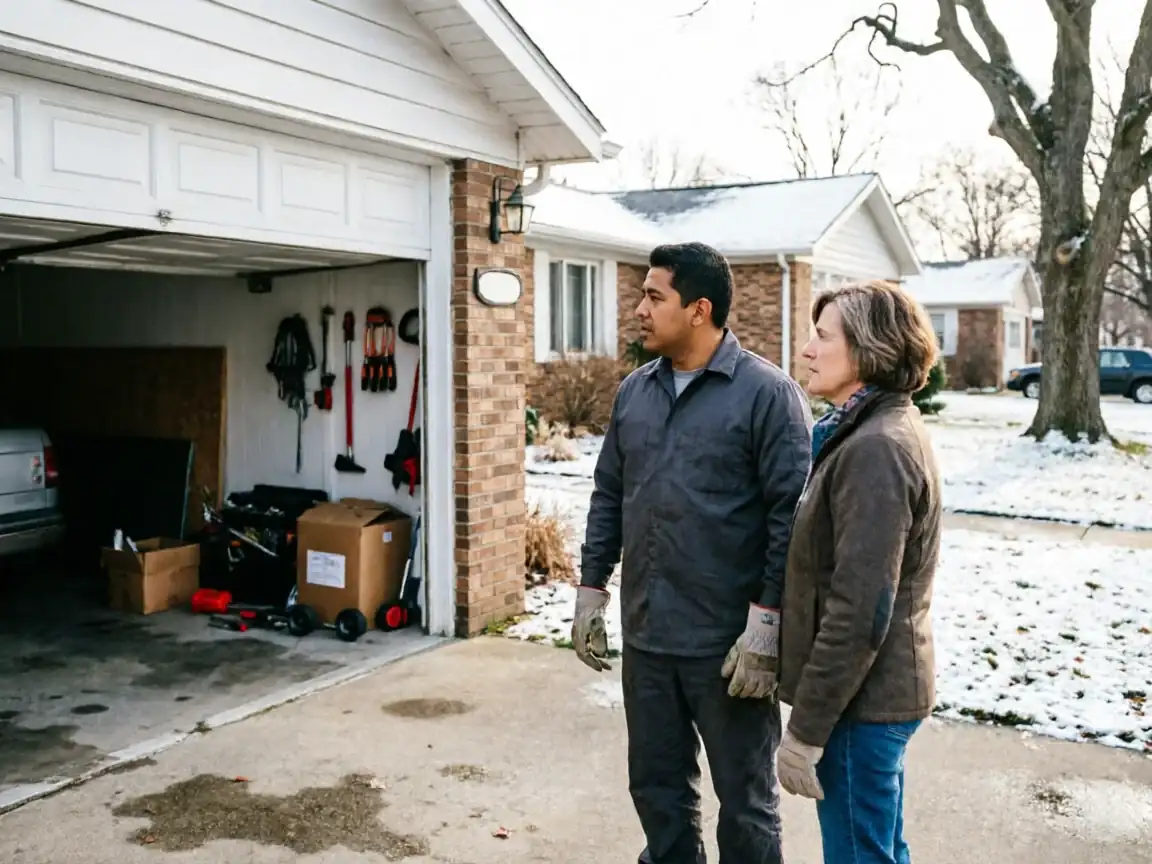
A technician and a woman stand in a driveway looking at an open garage.

Clear, up-front plan

You get the fix that’s needed and what drives the cost - before any work starts.

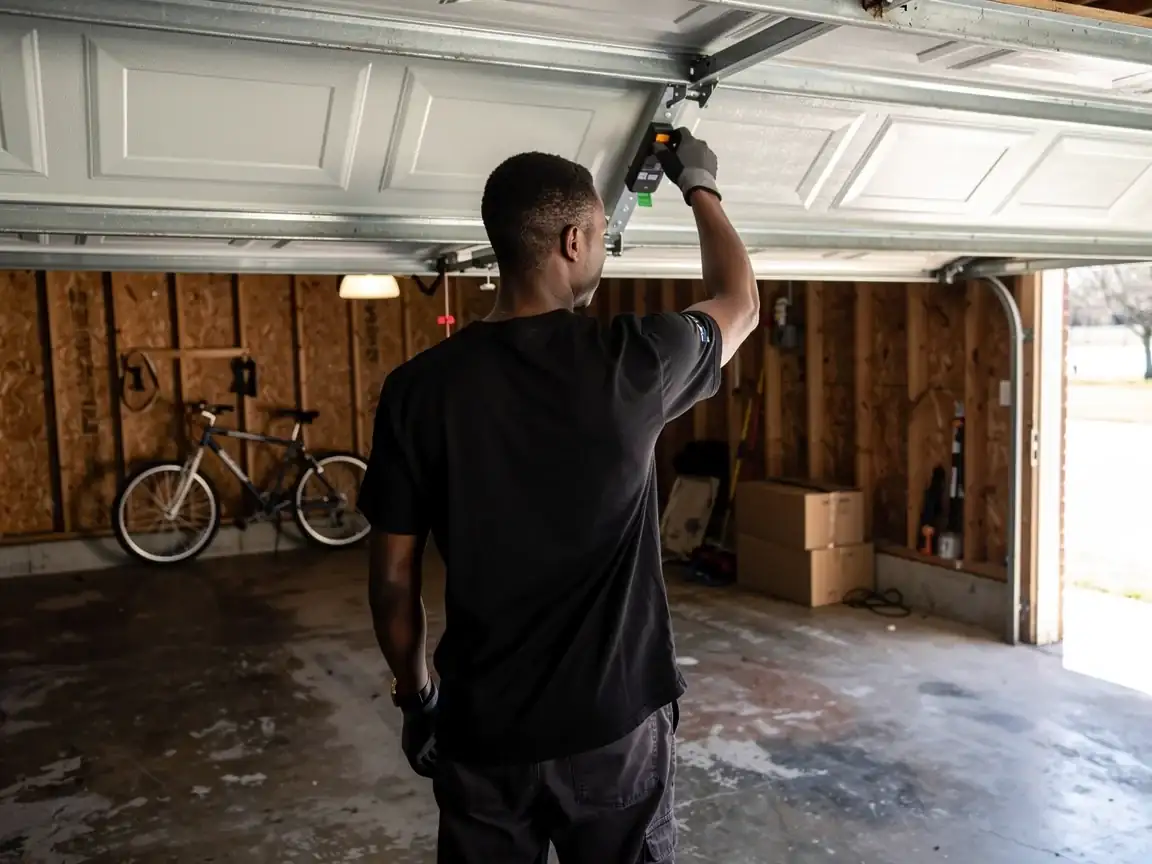
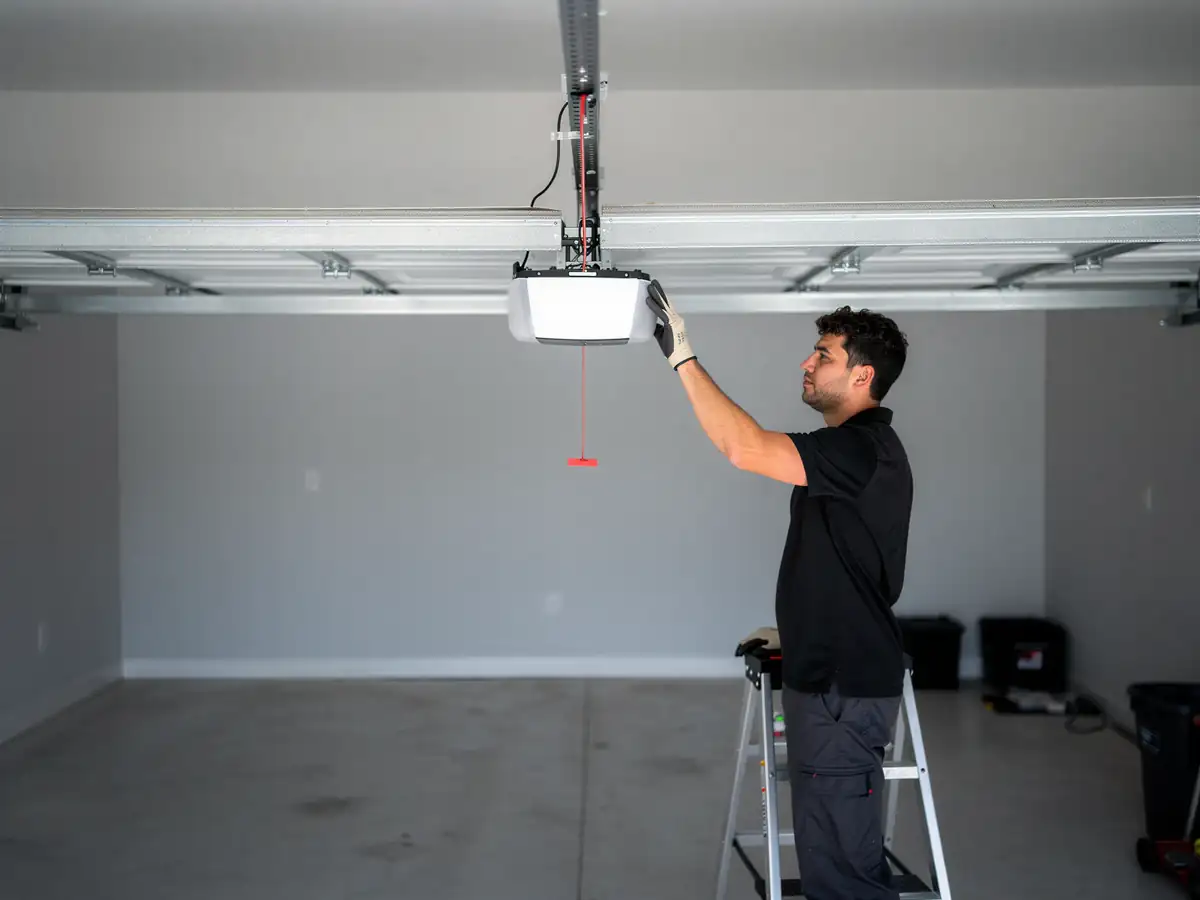
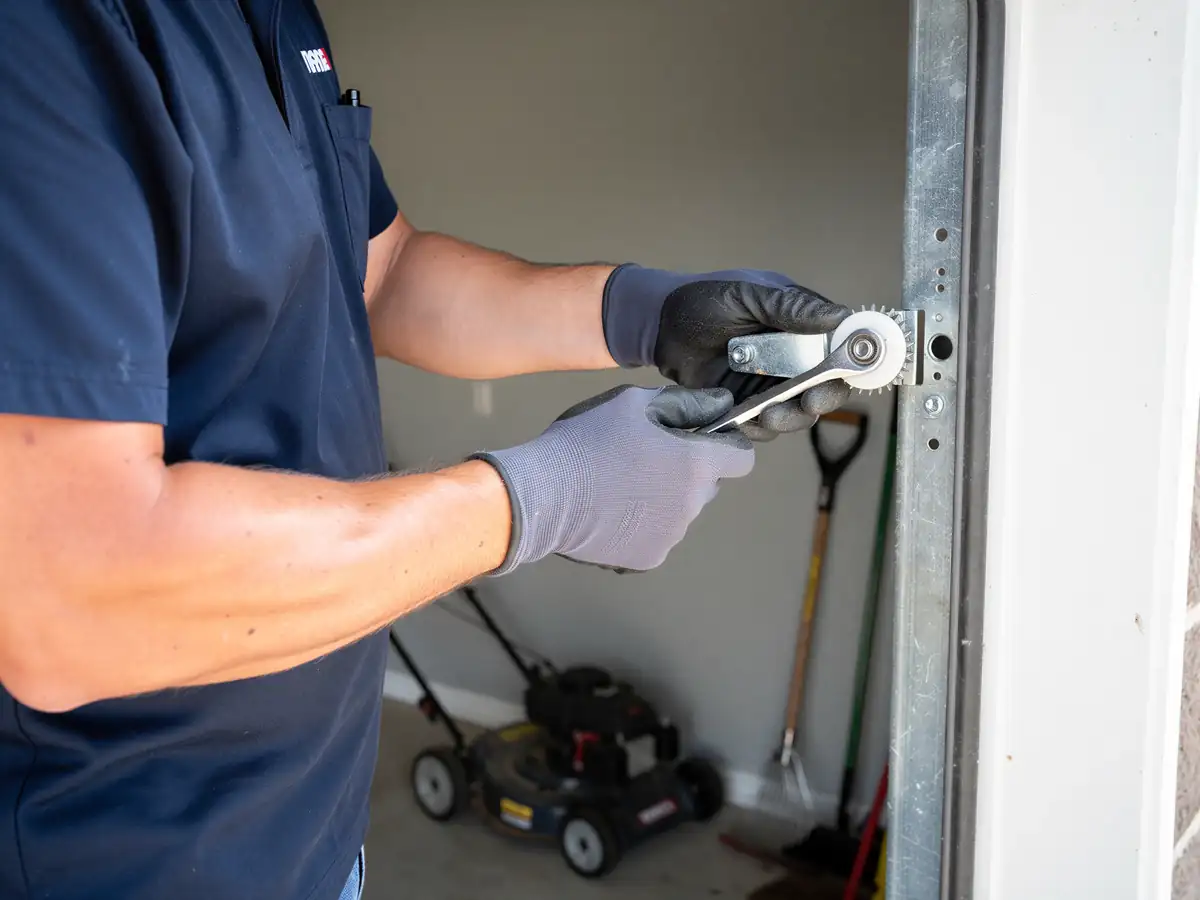
A technician in a black shirt adjusts a white garage door opener.

Repaired & tested

The repair is done, the door is set true and tested, and the work area left clean.

Not sure which repair your door needs in McHenry, IL? Describe what it’s doing - every job starts with a diagnosis.

How we work

What to expect

Diagnosis firstEvery visit starts by finding what actually failed - not a pre-written parts list.
The right part for the doorSprings and openers matched to the door’s weight and age, so the fix holds up.
Straight answersWhen a repair makes more sense than a replacement - or the reverse - you hear it plainly.
Clean, careful workTension released safely, hardware set true, the door tested under power before we leave.
What we do

Garage Door Services

Repair and installation work for McHenry homes and businesses.

Questions

Frequently asked

Straight answers about garage door repair in McHenry. Still unsure? Ask us directly.

My garage door is original to the house. Is it worth repairing?

Depends on the specific failure. If it's a roller or a cable and the door is structurally sound, a repair makes sense. If it's the spring and the door was built in that 1980s-90s stretch common to this area, we'd rather look at the whole door before committing to just the spring, since the rest of the hardware has usually logged the same wear.

Why does my door seem worse in winter?

McHenry sits in a cold-severe climate zone, and steel doors from the 1980s-90s building era typically have thinner panels and less insulation than current doors. Cold makes grease stiffen and metal contract, so marginal hinges and rollers that were fine in summer start binding or cracking once temperatures drop.

Can you match parts on an older door exactly?

Not always. Panel profiles and track widths have changed since the 1980s and 90s, when most of the housing here was built. We'll tell you upfront if an exact match isn't available rather than force a near-match that could stress the rest of the door.

Ready to get your garage door sorted?

Tell us what it’s doing and where you are in McHenry - we’ll take it from there.

Request a QuoteCall