Why This Fails Locally
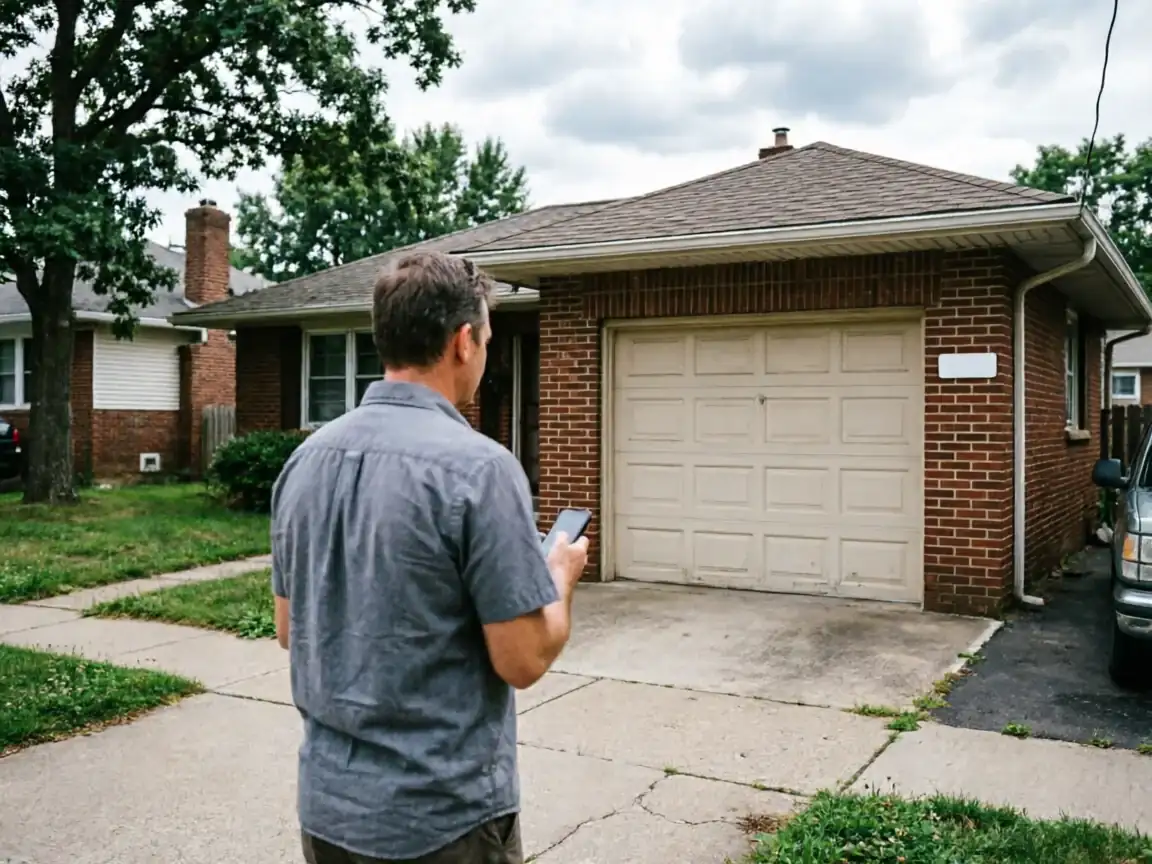
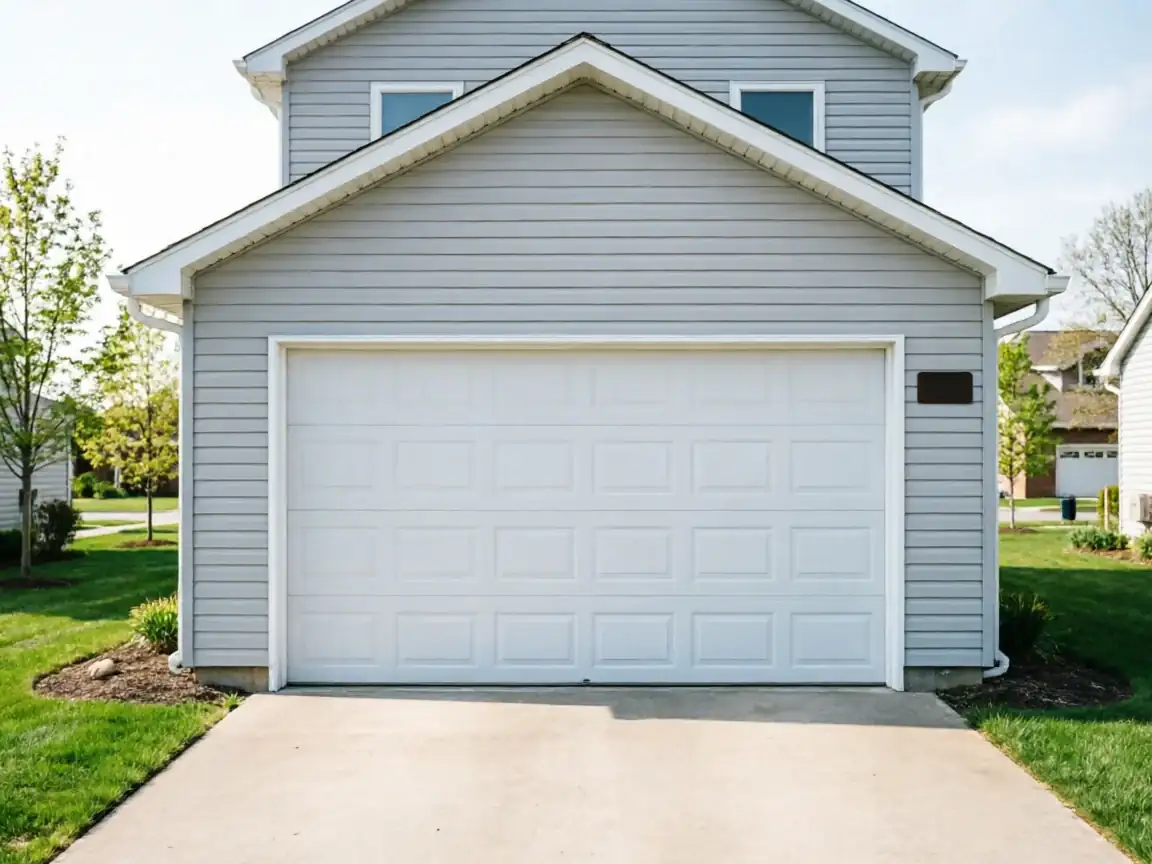
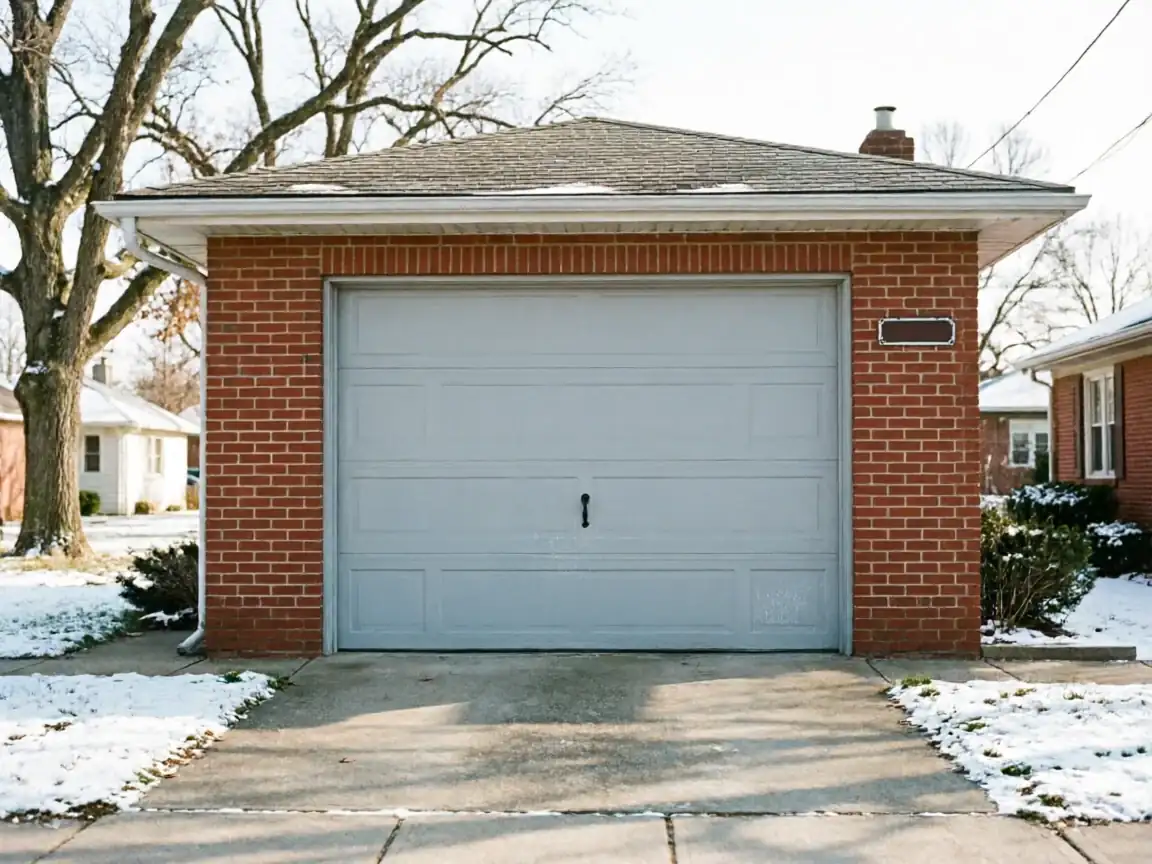
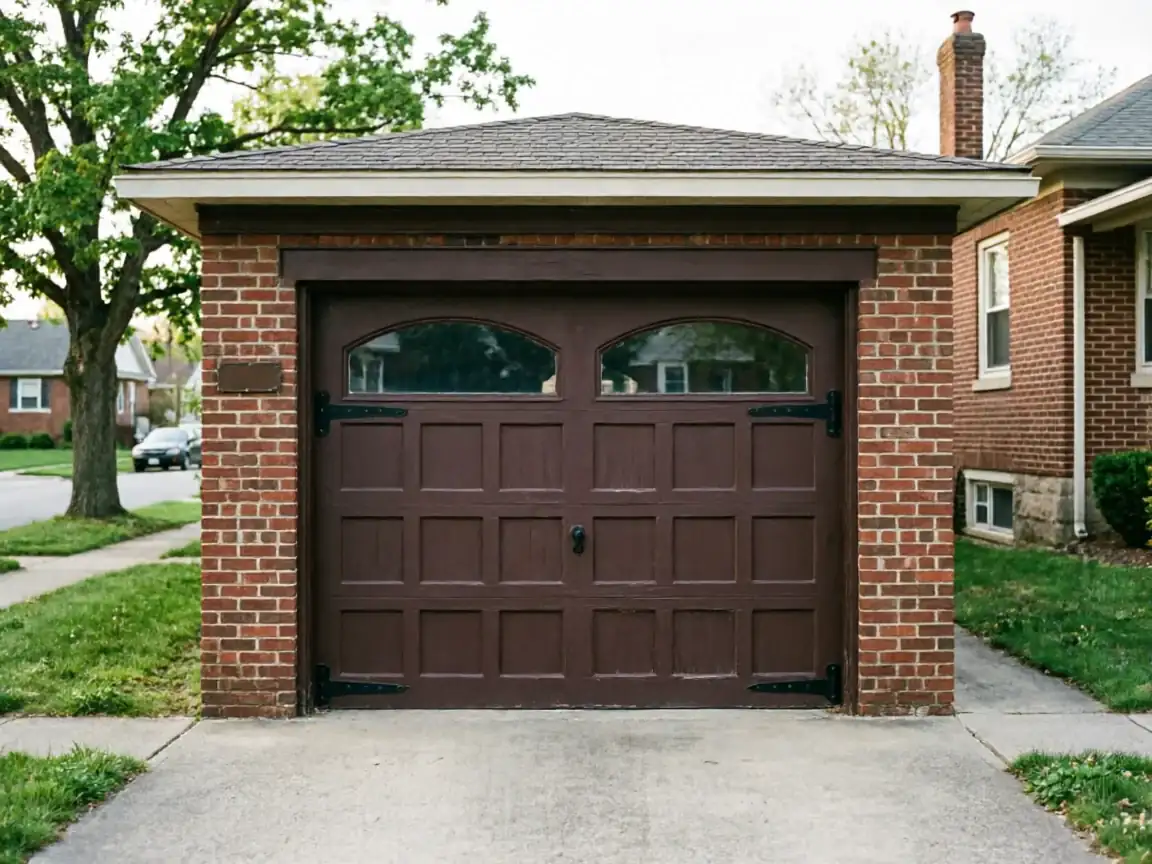
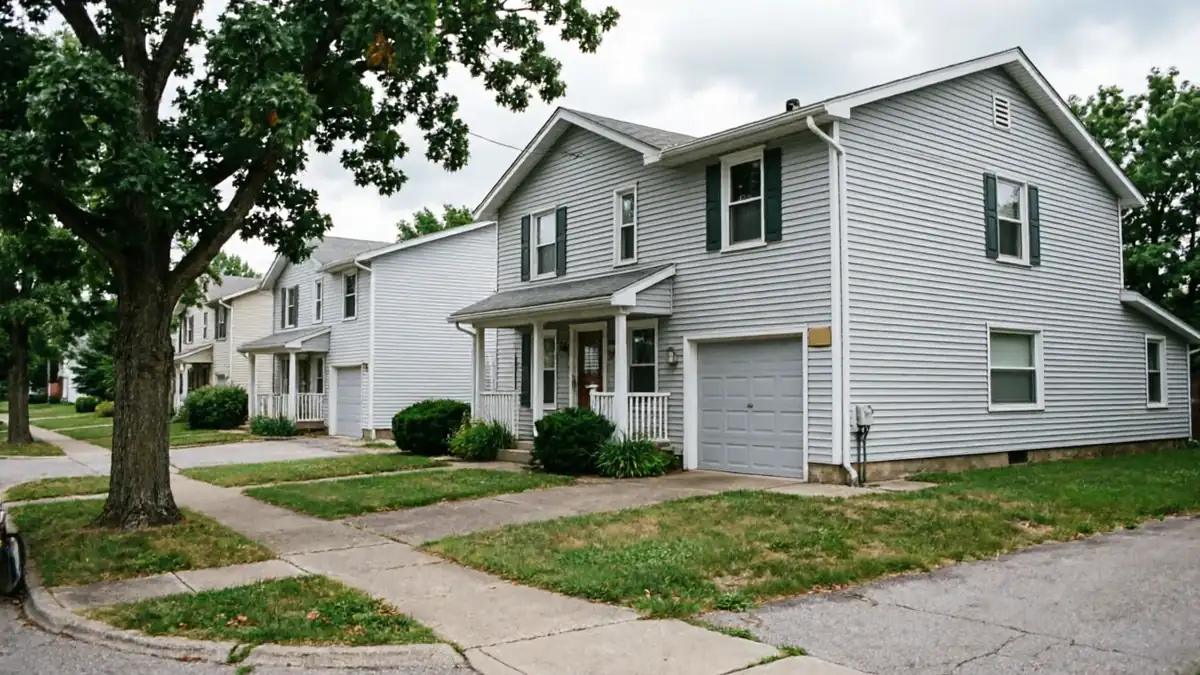
Most houses standing in McHenry went up between 1946 and 2009, with the median build year landing around 1987. That one number explains a lot of the repair calls we get. A door and opener installed when a subdivision went up in the late 1980s or early 1990s is now thirty-plus years old, and that's past the working life of the torsion spring, the drum cables, and often the opener's gear set. Houses built in that window also tend to share the same hardware specs - same spring wire gauge, same track width - because builders used whatever the regional supplier stocked that decade. When one fails, a lot of them are due to fail close together.
The cold makes this worse, not just uncomfortable. McHenry sits in a severe cold climate band, and steel springs lose tensile flexibility as temperatures drop. A spring that's been slowly fatiguing for two decades of McHenry winters is more likely to snap on the coldest mornings of the year, not in July. That's not bad luck - it's metal fatigue meeting a seasonal stress test it wasn't built to survive forever. If your door is from that 1980s-90s wave, the spring was never going to make it to 2040 regardless of how well it was installed.
Doing It Yourself
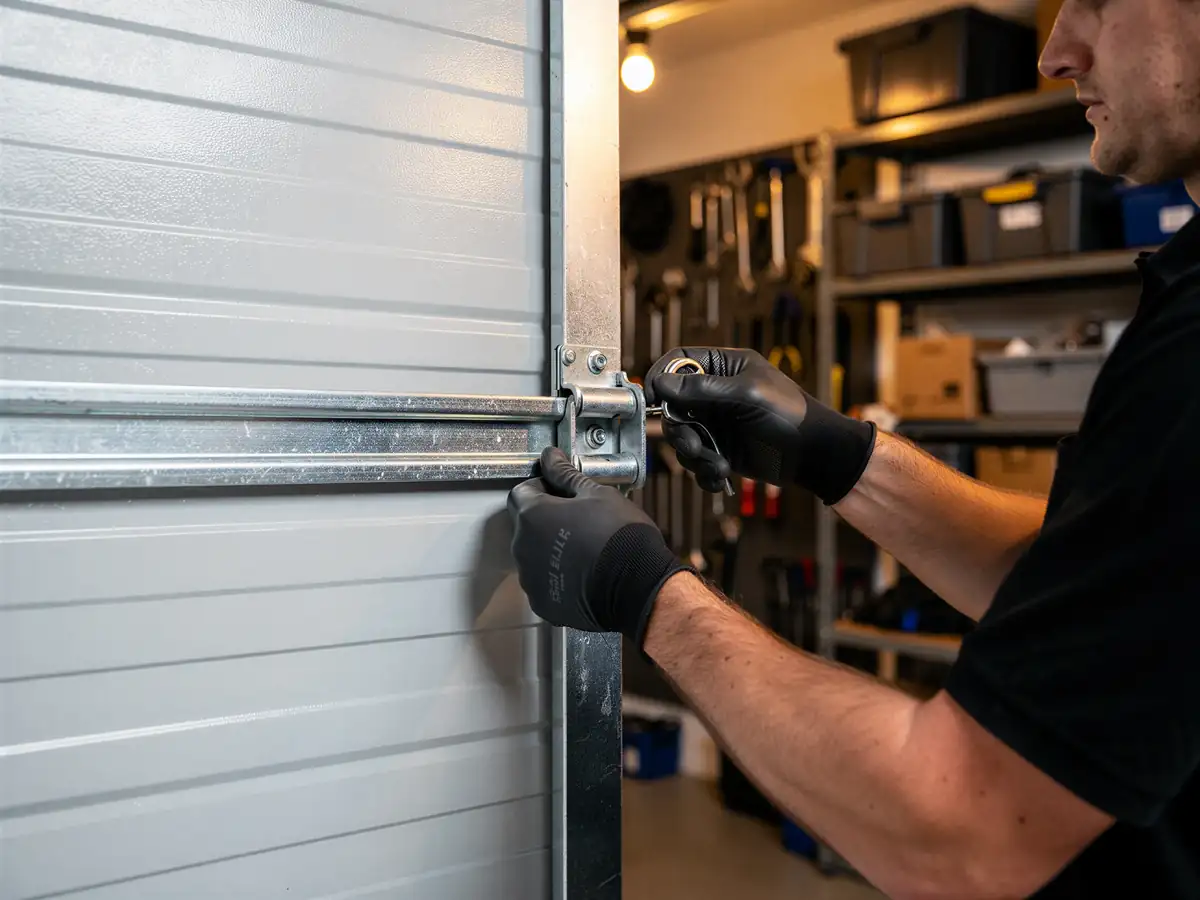
A lot of what goes wrong on a door this age is visible before it breaks completely, and some of it you can genuinely handle yourself. Tightening loose hinge bolts, clearing track debris, lubricating rollers with the right grease (not WD-40, which washes out and attracts grit) - all fine weekend work.
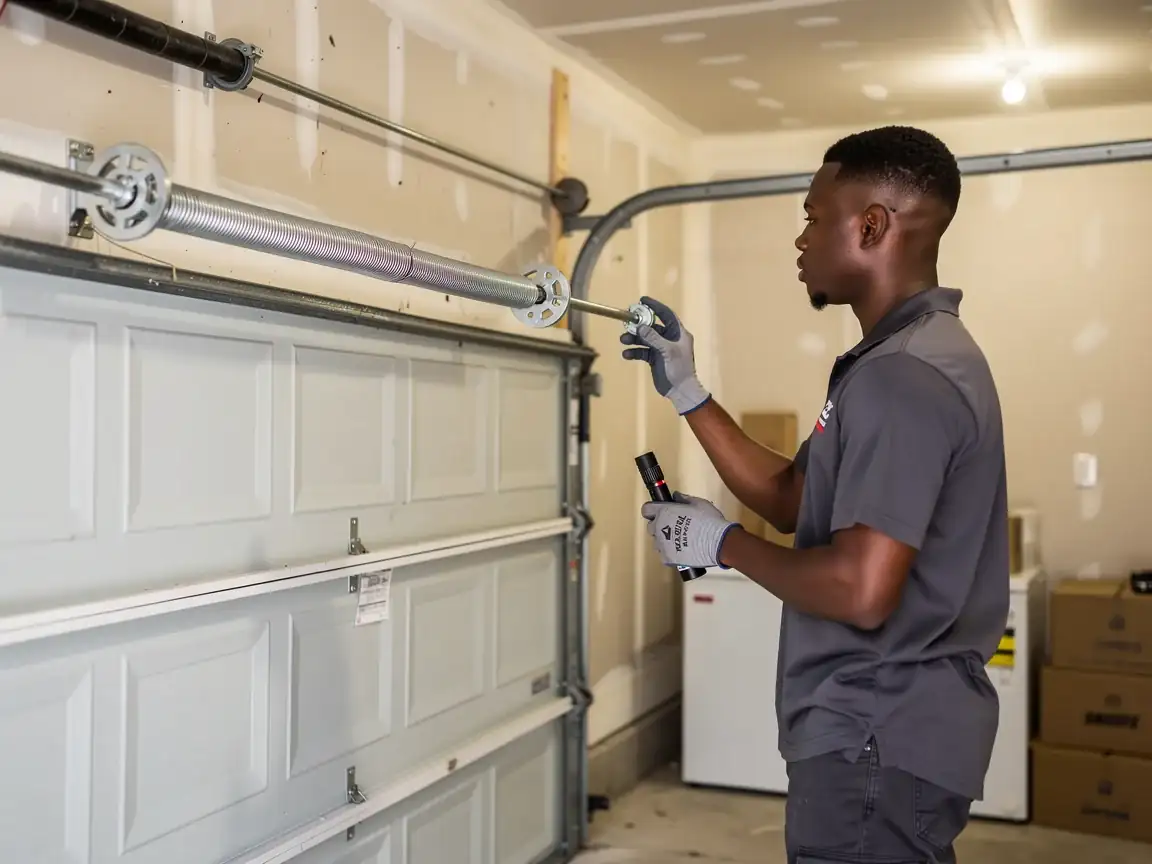
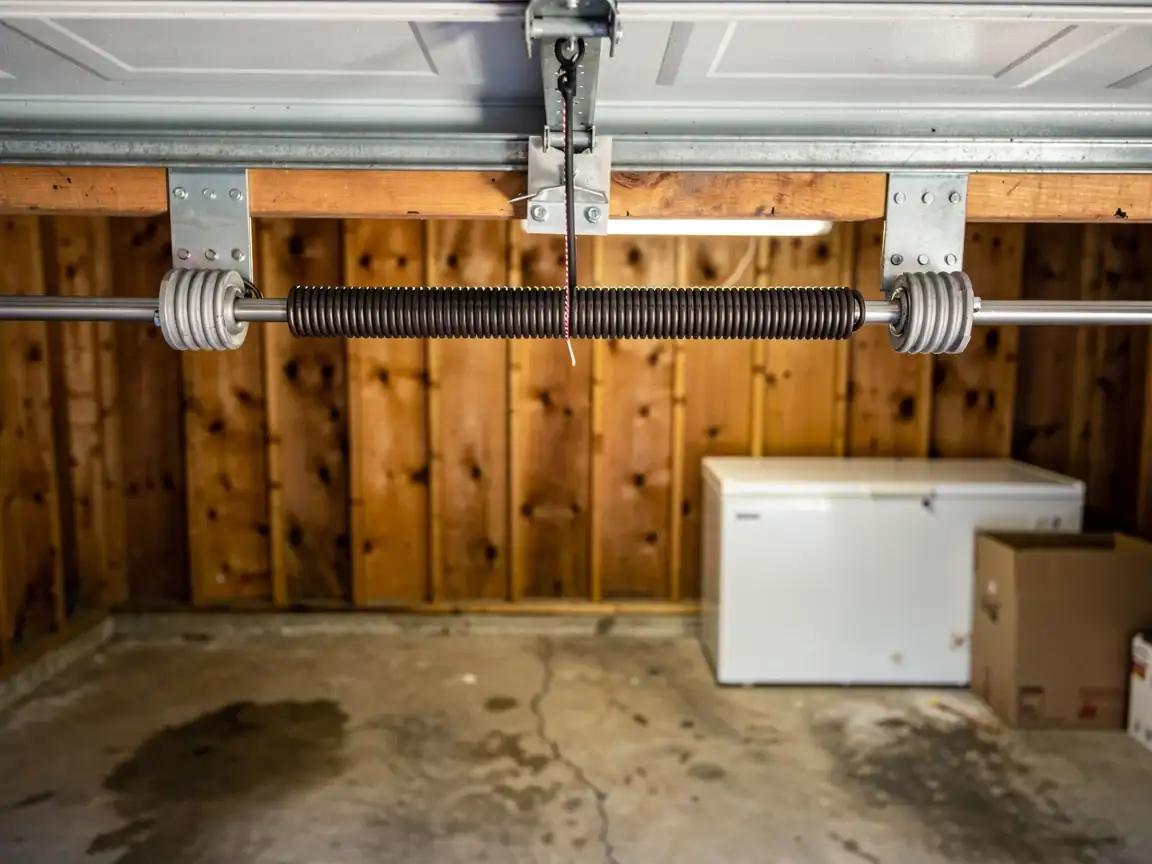
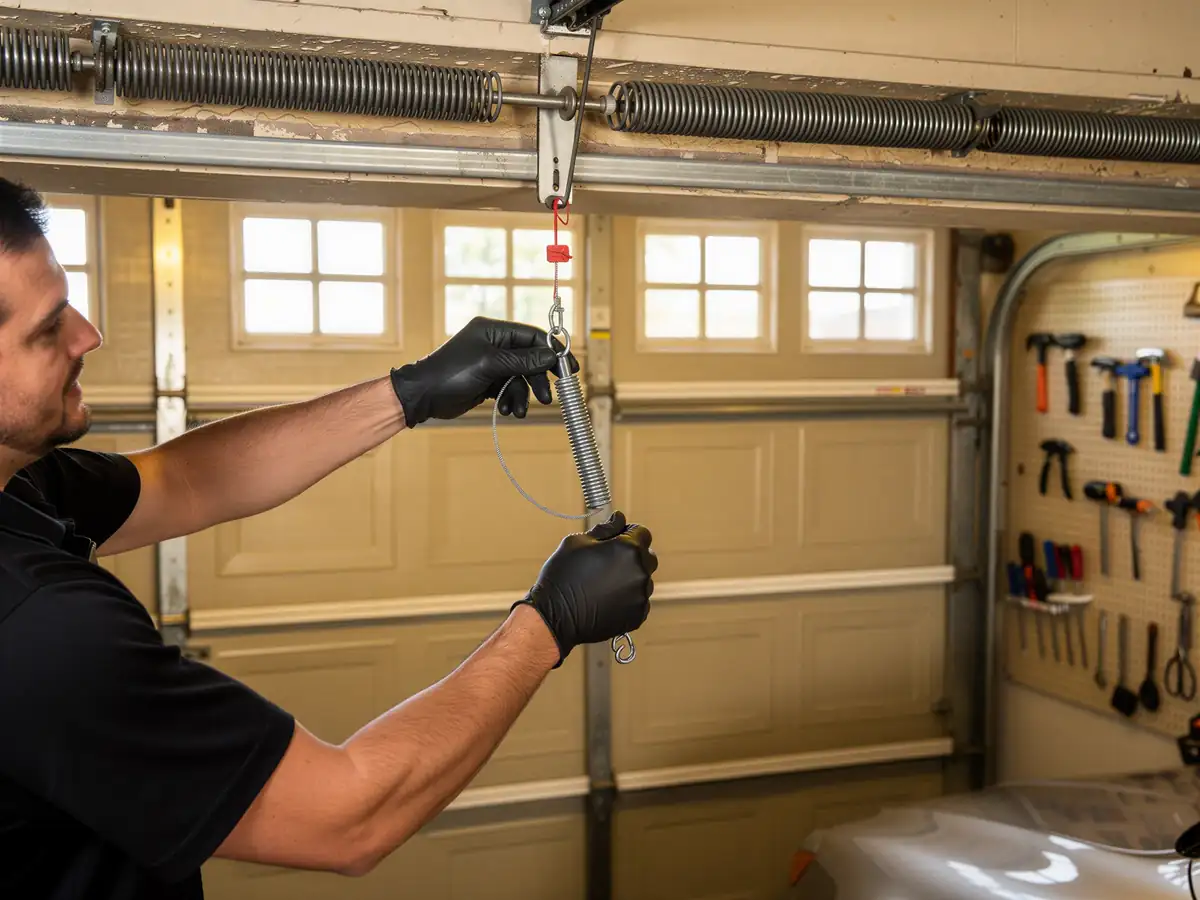
What you shouldn't touch is the torsion spring itself. It's under enough stored tension to break a bone or worse if the winding bar slips, and that risk doesn't go down because the spring looks old and tired - if anything it goes up, since a fatigued spring can let go with less warning. If you hear a loud bang from the garage and the door won't move, that's very likely a broken spring, and the right move is to leave the door alone and call someone, not to prop it open and start troubleshooting.
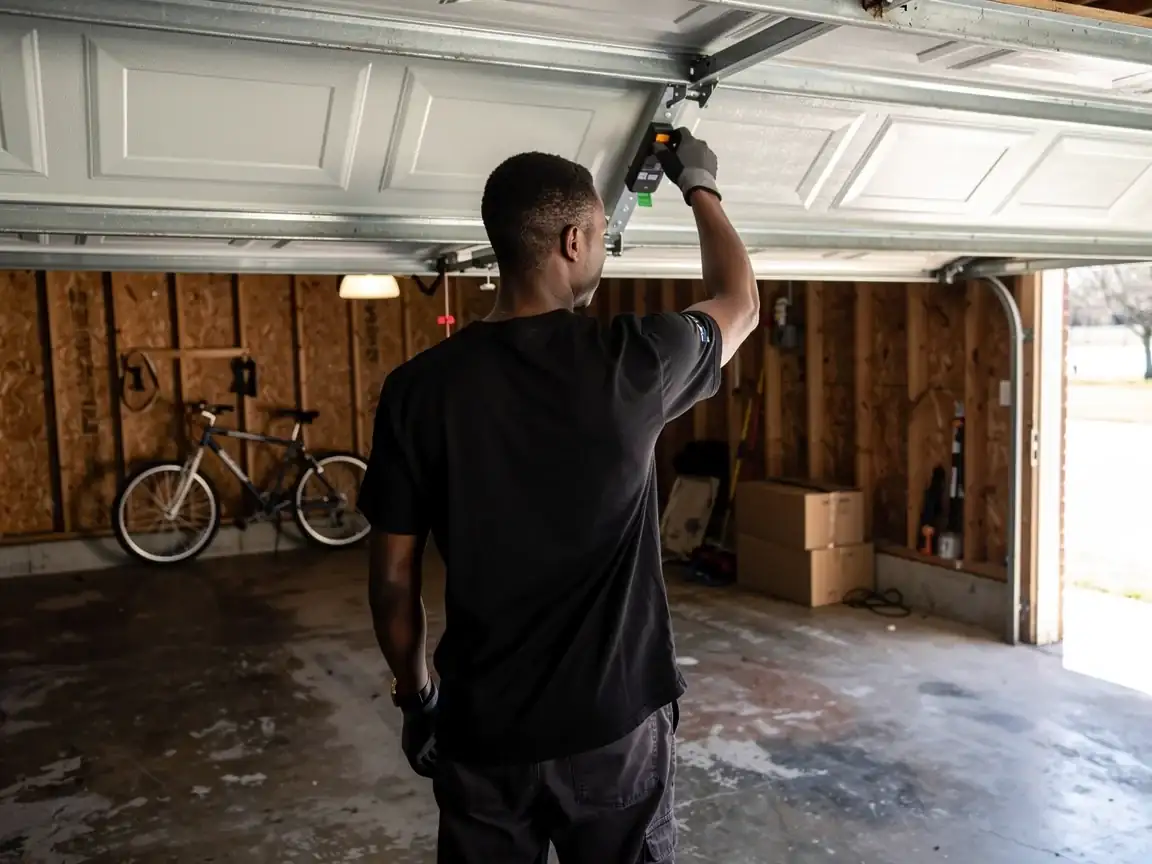
We'll also say plainly: if your opener is original to a house built in that 1980s-90s window, repairing it piece by piece sometimes costs more over a year than replacing it outright, especially once the circuit board starts going. We'll tell you straight when that's the case instead of running the meter on parts that are near the end anyway.
What Can Go Wrong
On houses from McHenry's main building era
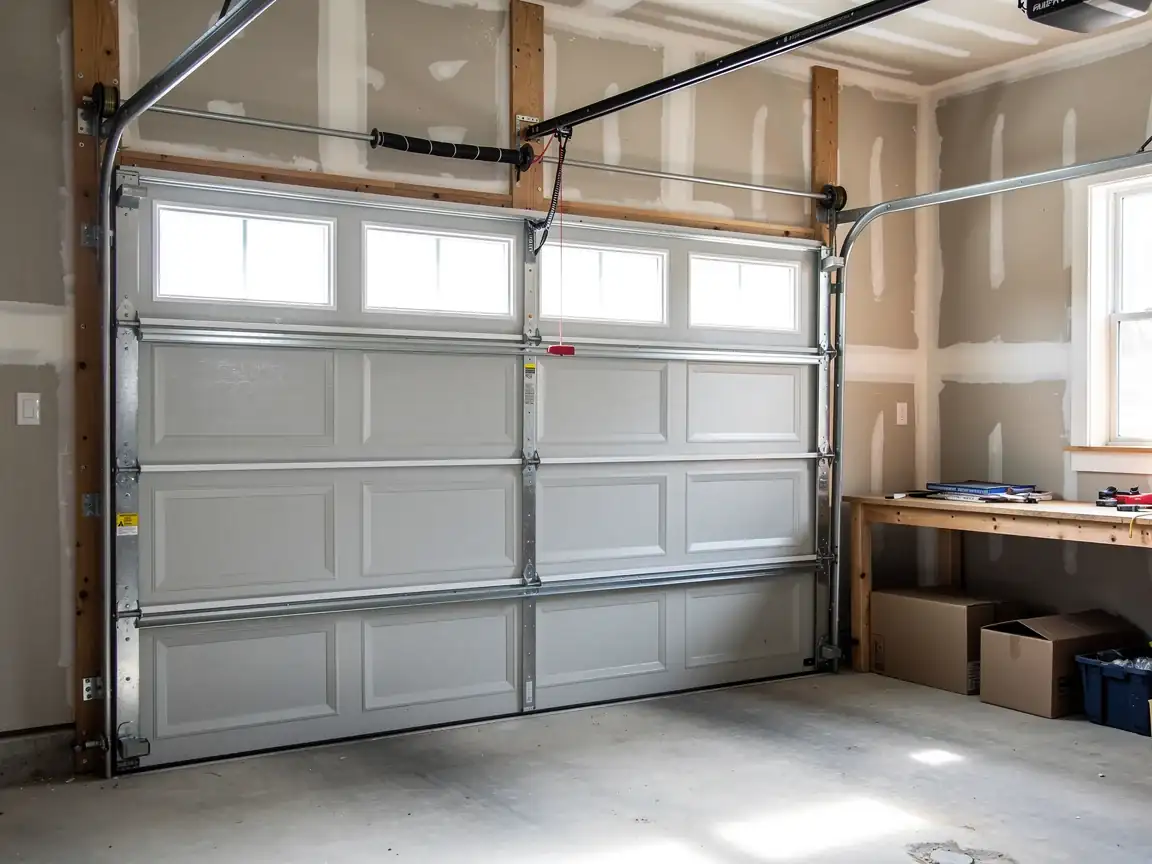
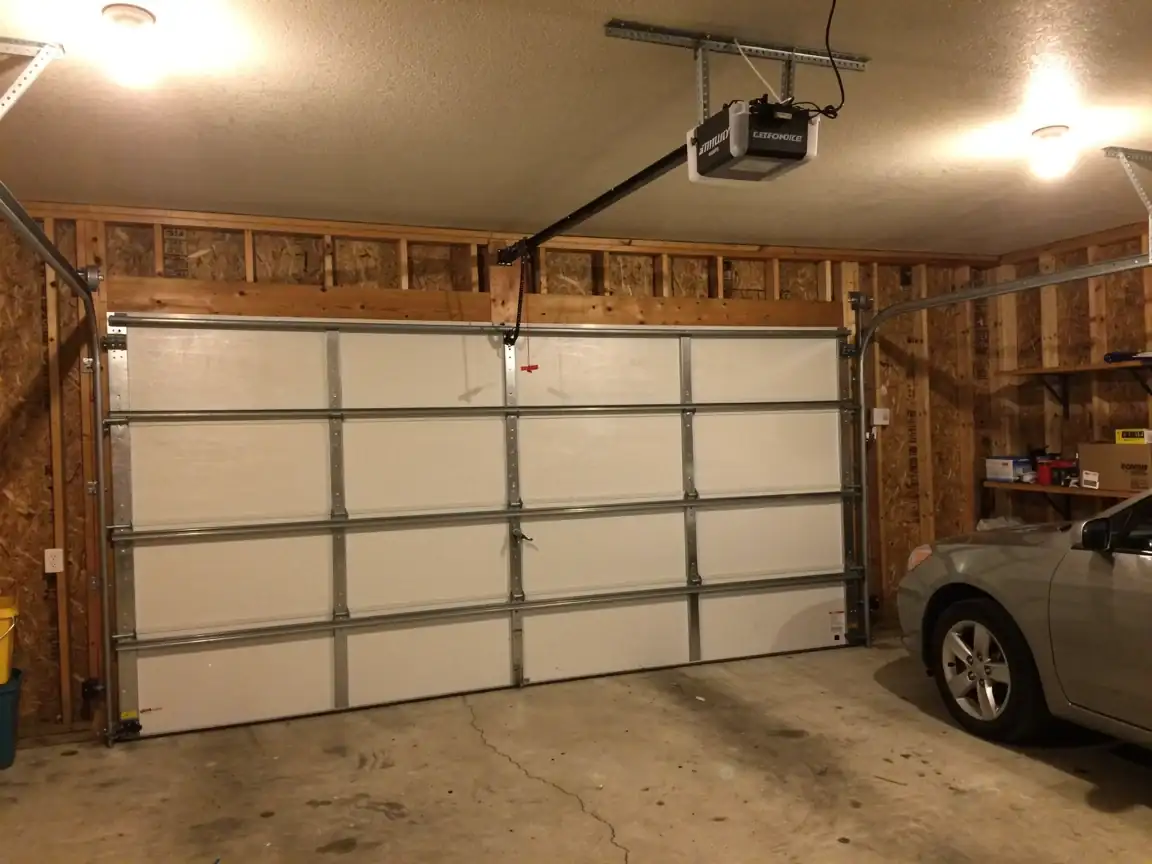
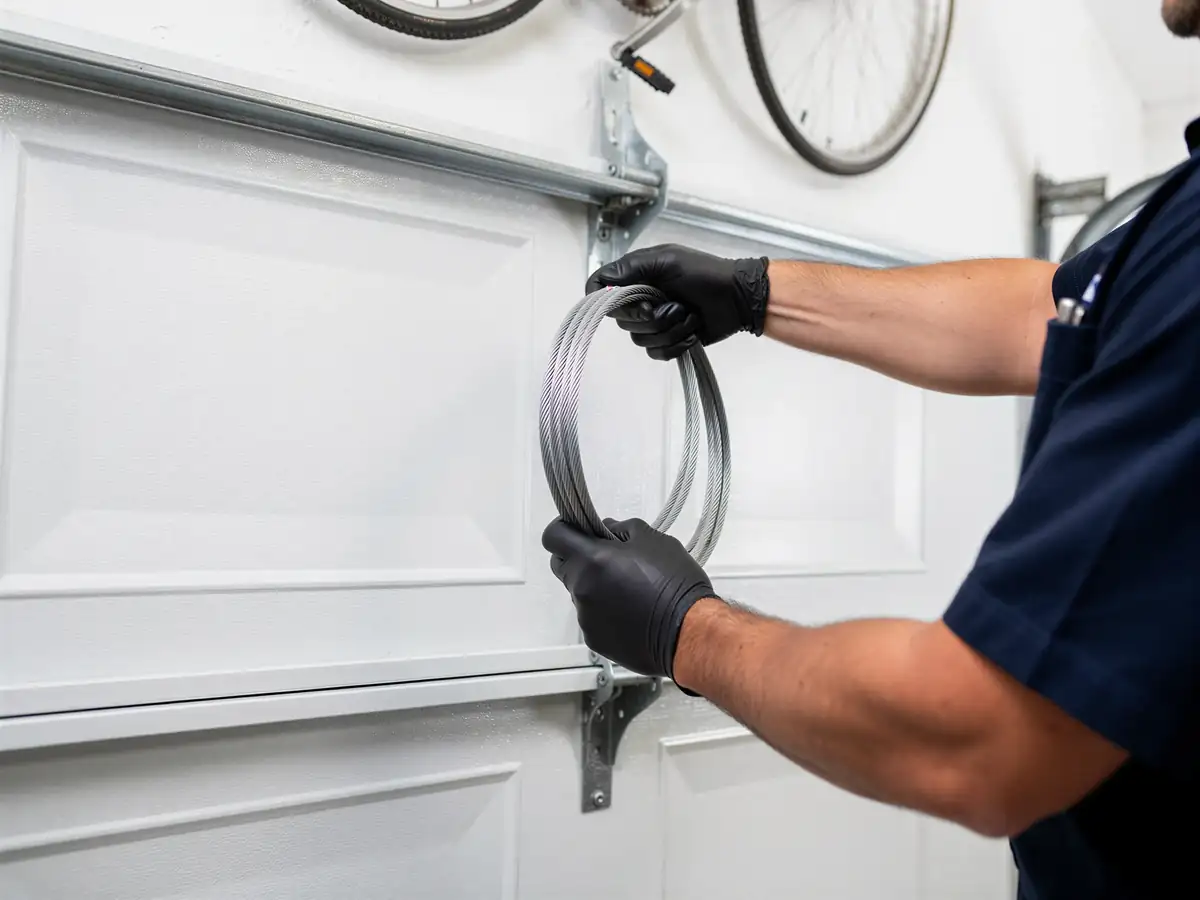
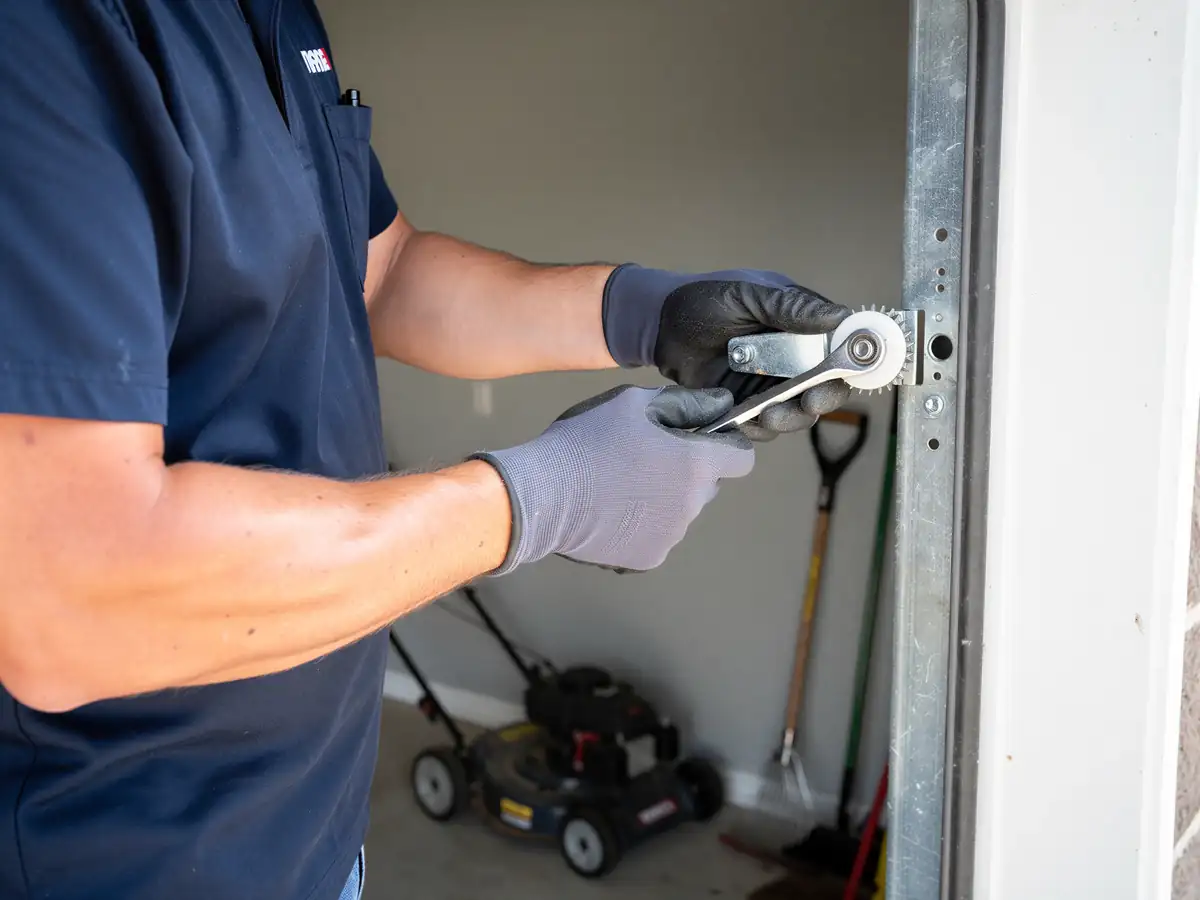
The recurring failures are torsion springs that have simply outlived their cycle count, drum cables fraying at the stress point near the bottom bracket, and opener logic boards that fail after enough winters of condensation and temperature swings inside an unheated garage. Rollers on steel track, common in that era, seize up in cold weather when old grease thickens, which then overloads the opener motor trying to force a door that isn't moving freely.
In a severe cold climate, there's also a failure mode specific to the season
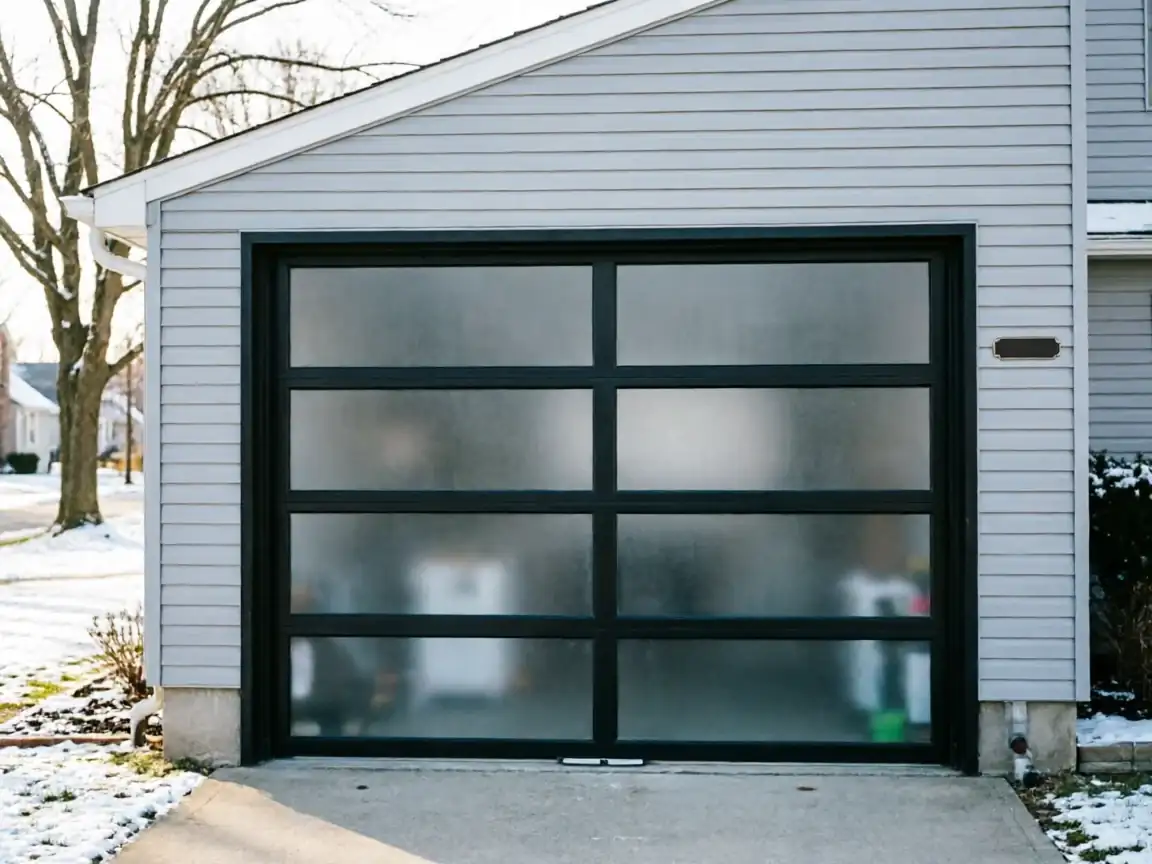
Panels can warp slightly at the seams when the garage interior temperature swings wide relative to outside air, especially on doors without insulation, which was common on original builds from this stretch of housing. That warping throws off the track alignment just enough to cause binding, which again stresses the opener and the cables beyond what they're rated for.
We don't carry every obsolete part for every 1980s build on the shelf
Some of the original hardware from that era is no longer made, and on those jobs the honest fix is replacing the section rather than hunting for a discontinued match.
How It Shows Up
The order of symptoms usually tells you something. A door that's suddenly heavy to lift by hand, with the opener straining or reversing midway, points to a spring that's lost tension rather than an opener problem - common on doors original to McHenry's 1980s-90s housing wave. A loud bang followed by a door that won't budge at all is almost always a snapped torsion spring, and on a cold morning that's close to a textbook case for this town's climate.
Grinding or popping from the track as the door moves, especially worse in freezing weather, usually means a roller has seized rather than the motor failing. If the opener runs but the door doesn't move, or moves and reverses immediately, that's more often a cable or drum issue than an opener issue, particularly on the cable-fatigue pattern we see on original hardware from this era.
If you're not sure which of these you're hearing, that's fine - describe it when you call and we can usually narrow it down before a truck is even on the way.