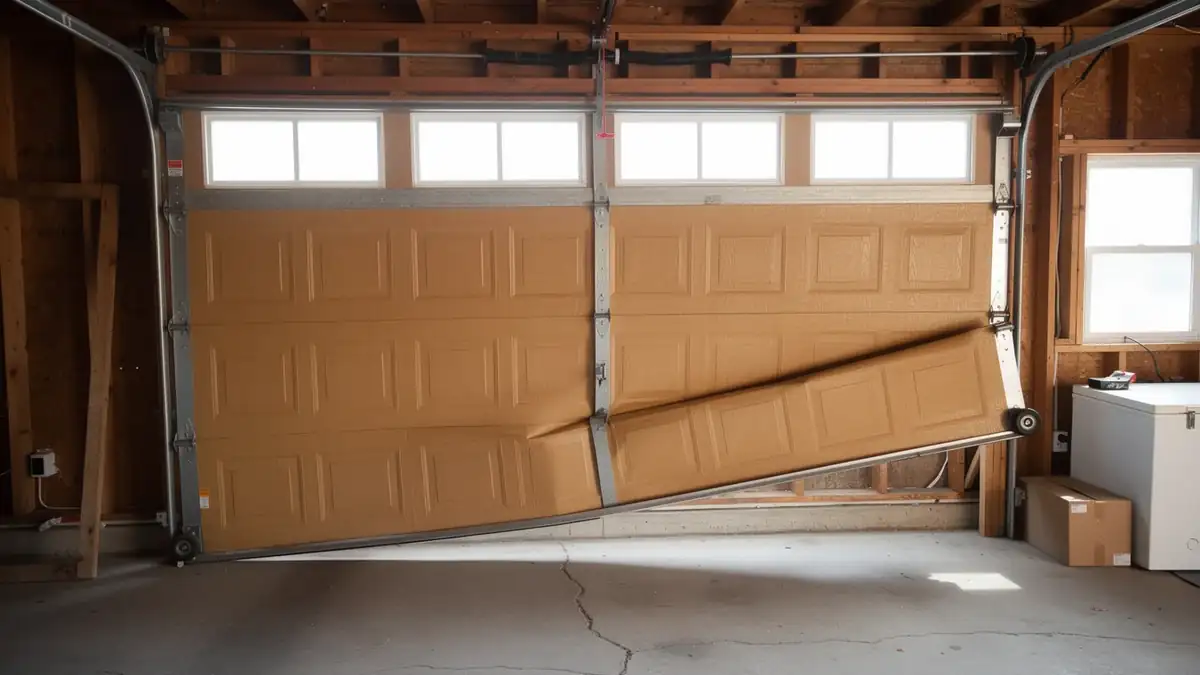
When It Stops Being a DIY Job
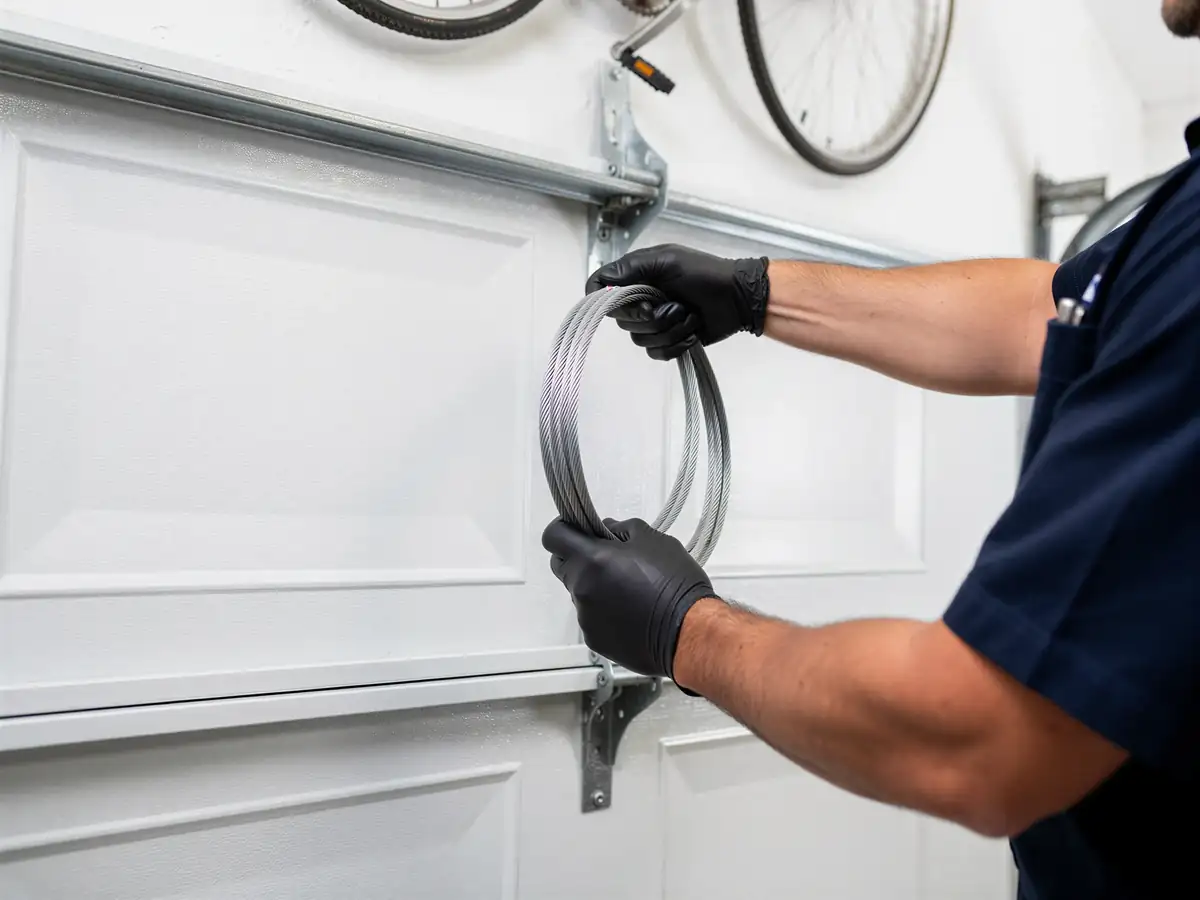
If a roller has simply popped out of the track on one side and the door still sits square, you can sometimes walk it back in with the door closed and the opener unplugged. That's about where the DIY line ends. Once a track is bent, once you see a gap wider than a fingernail between roller and rail, or once one cable has slipped off its drum, you're not looking at a realignment job anymore - you're looking at a door under spring tension that can jump off a ladder at you.
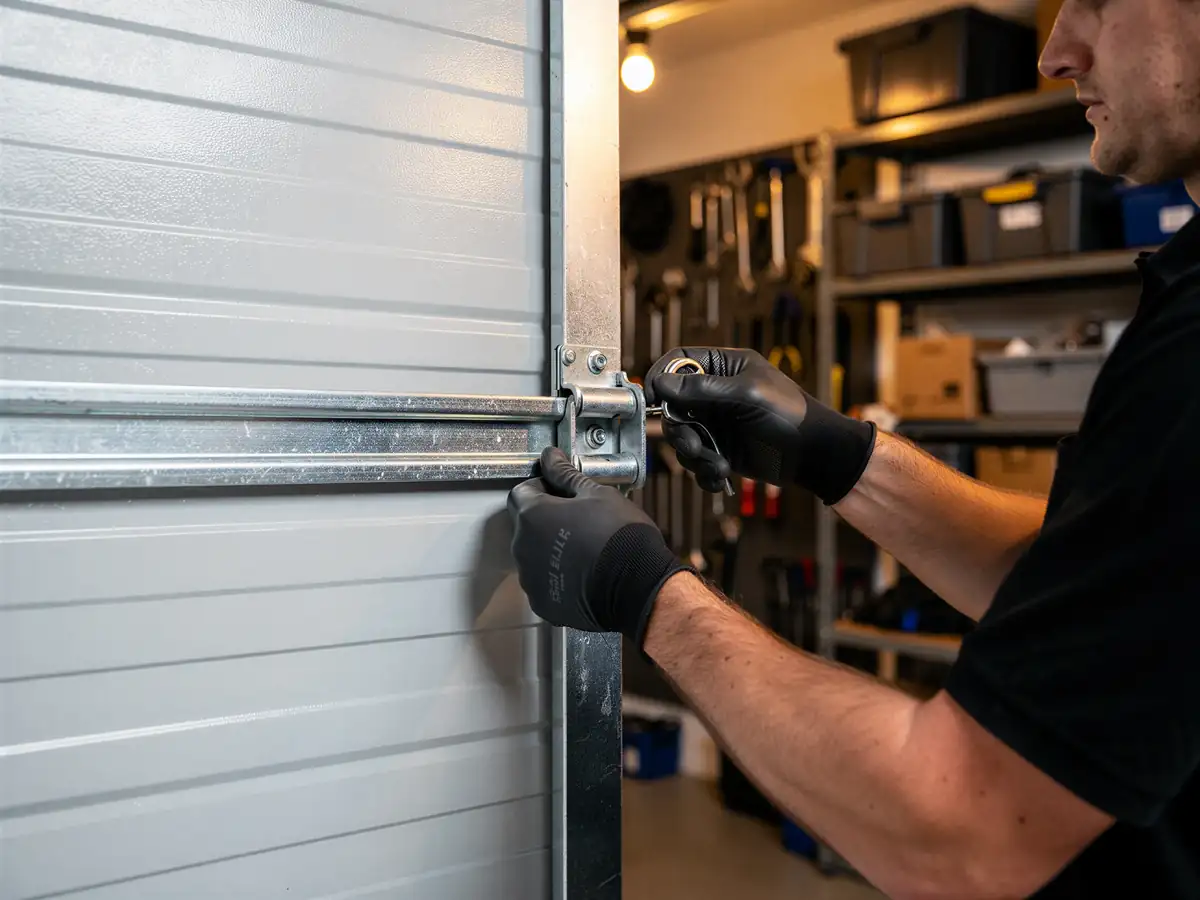
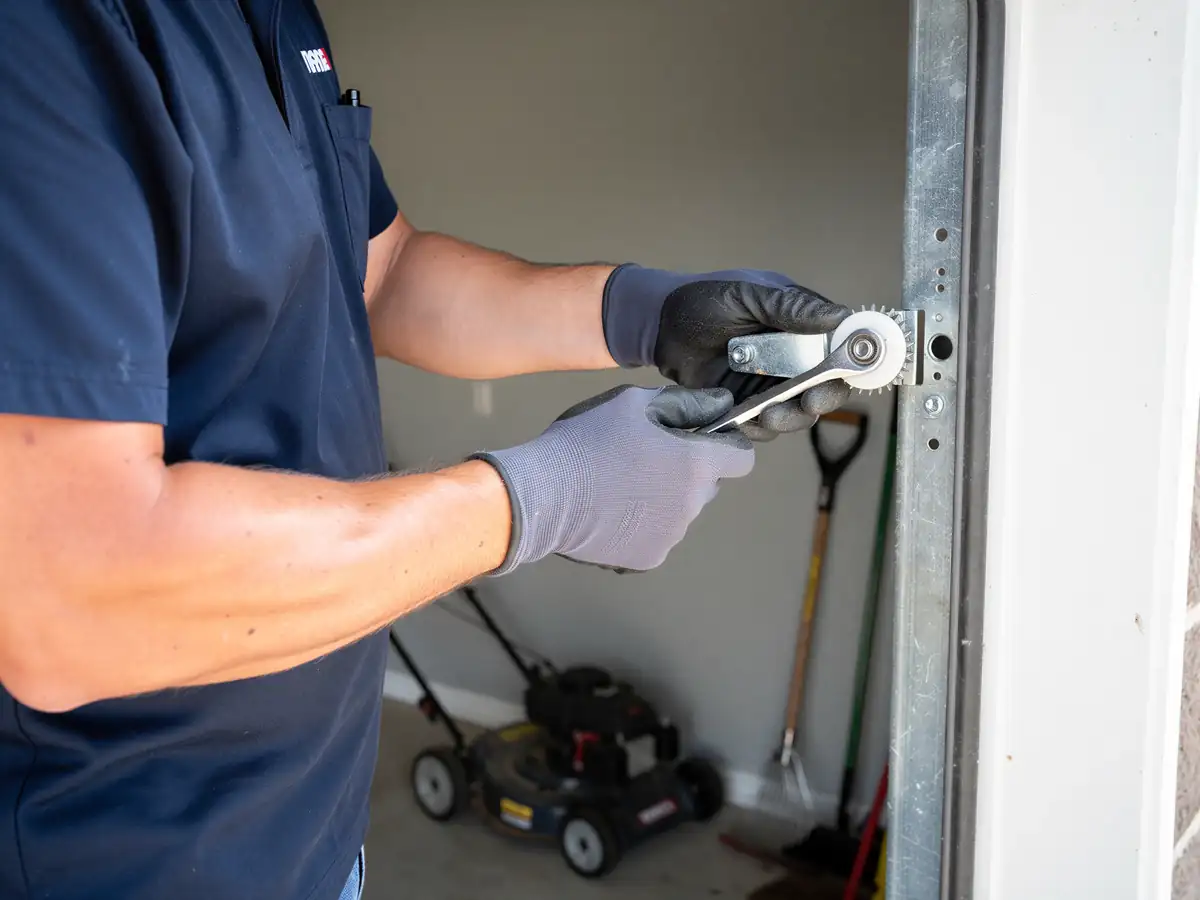
McHenry's housing stock runs 1946 to 2009 with a median build year of 1987, and most of the service area's 57 named subdivisions are clustered in that 1980s-90s window. Doors from that era usually run on galvanized steel track that's held up fine for thirty-plus years, but the brackets holding that track to the jamb loosen with age, and a loose bracket lets the whole rail flex sideways under load. That's a bent-track problem, not a roller problem, and it needs a level and a square, not a rubber mallet.
We won't pretend every call needs a truck. If the fix is a dry roller or a track bolt that backed out, we'd rather tell you that on the phone than bill you for a visit.
What Local Conditions Do
McHenry sits in a severe cold climate band, and cold does something specific to track alignment that owners don't expect: it shrinks the steel. A track that was dialed in during a 90-degree July can be a sixteenth of an inch tighter in January, and on a door that was already running close to the edge of its tolerance, that's enough to bind a roller against the rail wall. You hear it as a new scrape or grind that wasn't there in summer.
Cold also stiffens the lubricant on the rollers and hinges, which means more resistance, which means the opener has to pull harder to move the door. An opener pulling harder on a track that's already slightly out of square accelerates wear on exactly the spot where the track starts to walk off plumb. This isn't a seasonal inconvenience you ride out - it's a compounding mechanical problem that shows up every winter until the track gets re-set or replaced.
Houses built in the 1987 median window typically have steel jambs and track hardware original to the house, meaning three decades-plus of expansion and contraction cycles on the same mounting points. That's wear a newer build simply hasn't accumulated yet.
Where People Go Wrong
The most common mistake we see is an owner treating a track problem as a spring problem
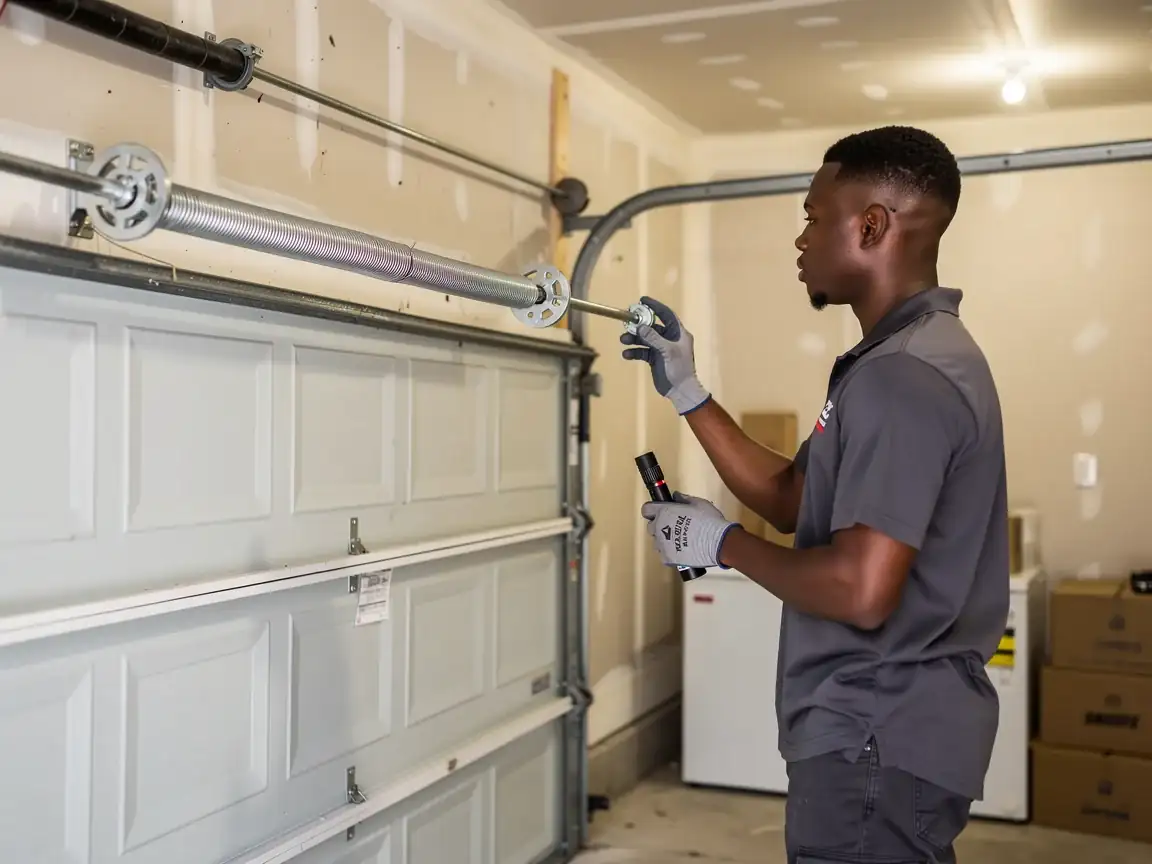
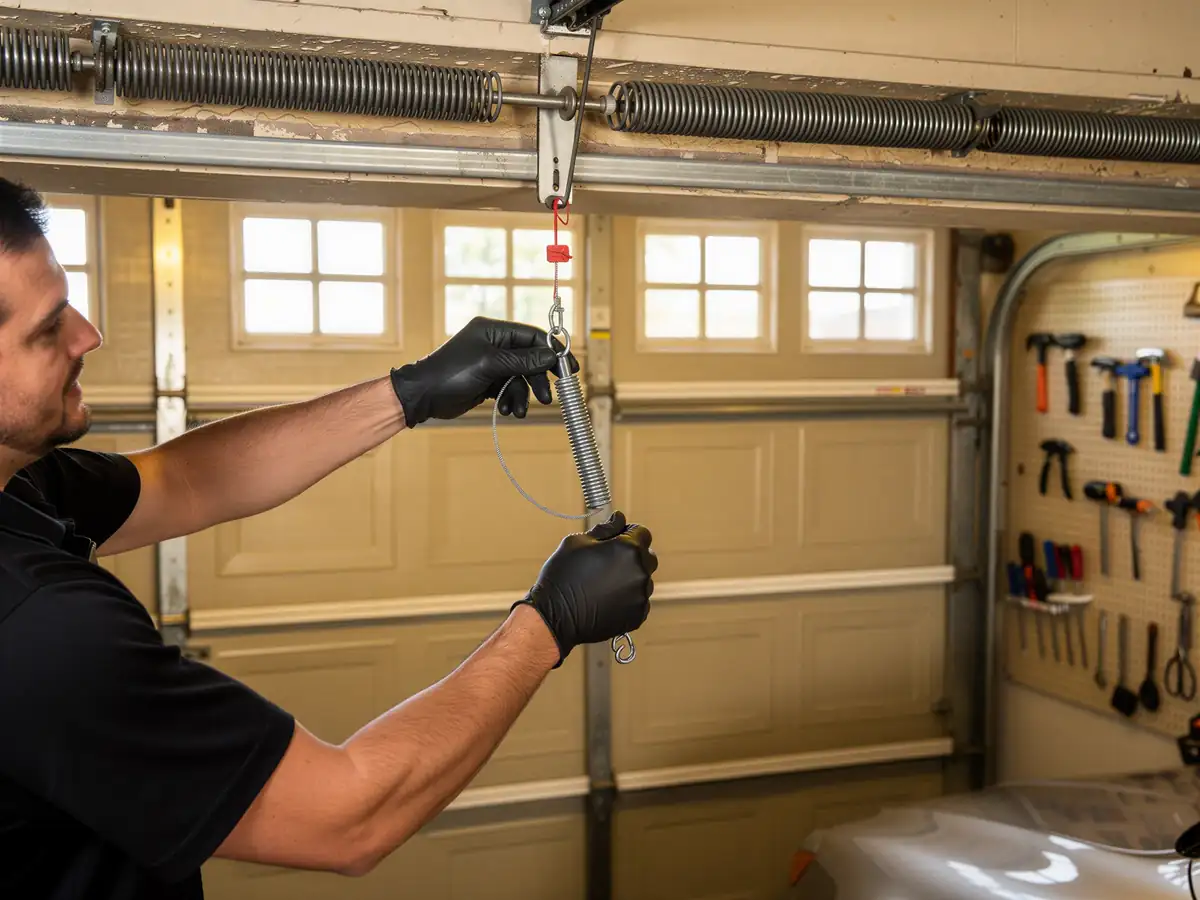
Or vice versa. A door that drifts to one side as it closes is almost always a track or cable issue. A door that feels heavy, won't stay up, or slams down fast is a spring issue. Tightening random bolts on a door that's actually got a bent rail just moves the binding point somewhere else.
The second mistake is forcing a door that's caught
If a roller jumps track and someone keeps hitting the opener button, the door keeps trying to travel on a rail it's no longer riding correctly, which bends the track further and can crack a panel. Stop, unplug the opener, and look before you try again.
The third is ignoring a slow drift for months
On the older end of McHenry's housing stock - homes pushing toward that 1946 start of the build range - track brackets that have loosened gradually don't announce themselves until the door is visibly crooked. By then you're not tightening a bracket, you're re-hanging a track section. Catching the drift early, when it's just a faint scrape in cold weather, is the cheaper call every time.
The Situation
McHenry's service area covers 156,361 households, with 96,533 of those owner-occupied, and a median household income of $113,125 - which is to say, most of the doors we look at belong to people who bought the house, not people renting it, and who've got the means to fix it right rather than patch it. That matters because a bent track on a 1980s-era door is often cheaper to replace outright than to hand-straighten, given how the steel gauges from that era respond to bending back.
We work this area and the towns within a few miles of it - Johnsburg, Ringwood, Prairie Grove, Wonder Lake, Lakemoor, Bull Valley, and out to Woodstock, Spring Grove, and Richmond - and the pattern holds across most of it: 1980s-90s construction, severe cold winters, and track hardware that's old enough to have earned its wear. If your door's drifting and you're not sure whether it's a five-minute fix or a track replacement, that's worth a look before you keep running the opener on it.