Why This Fails Locally
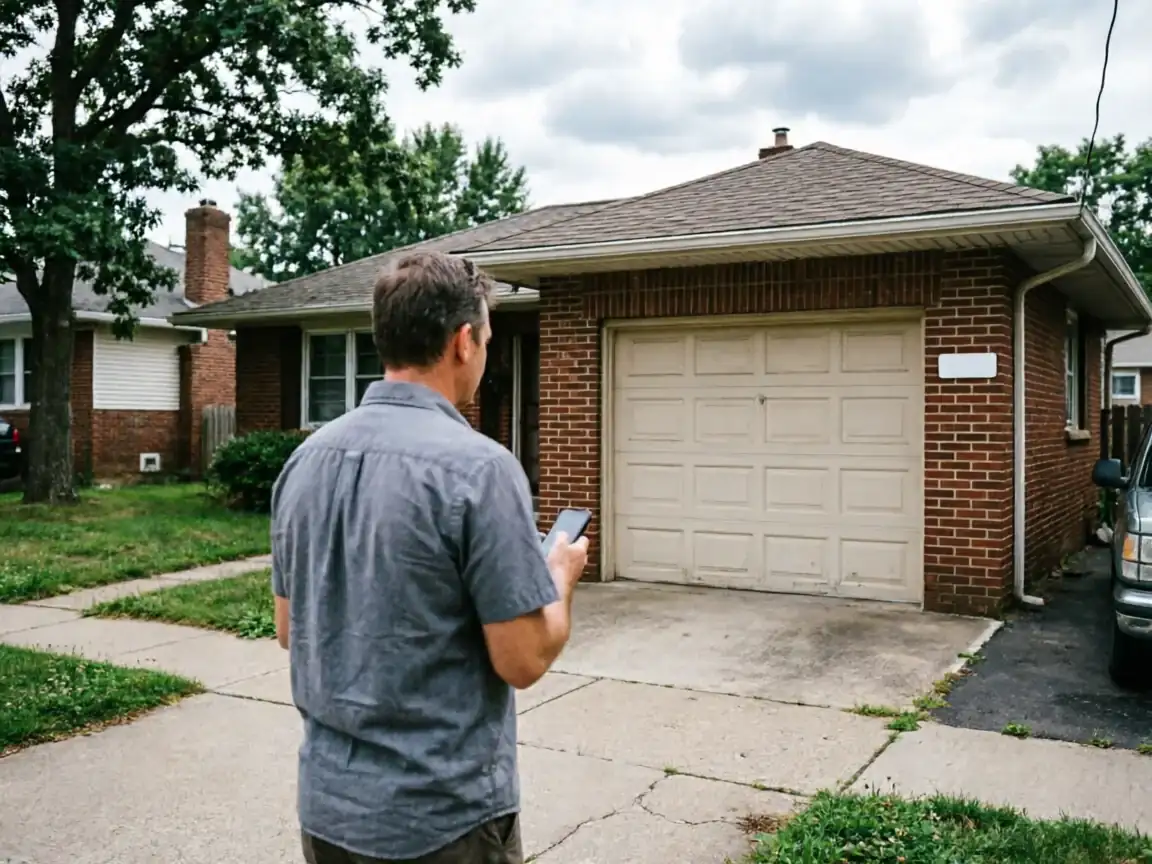
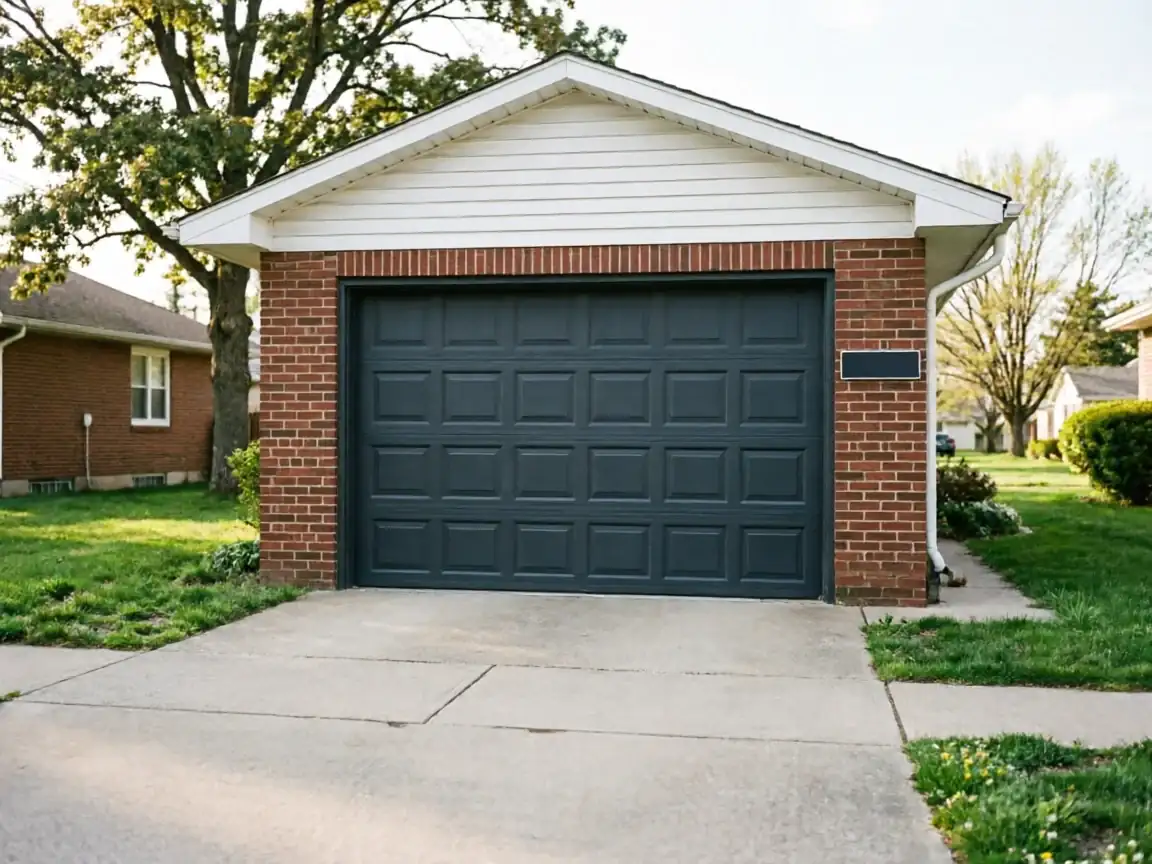
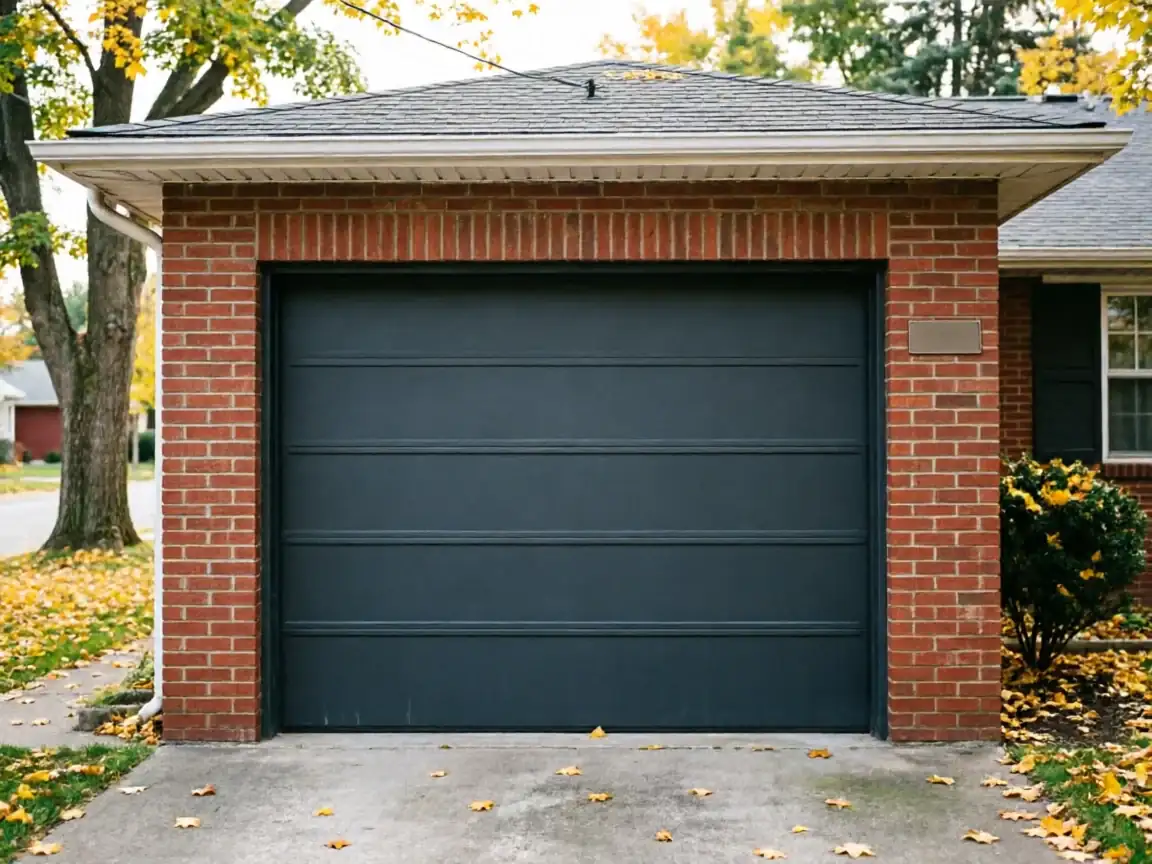
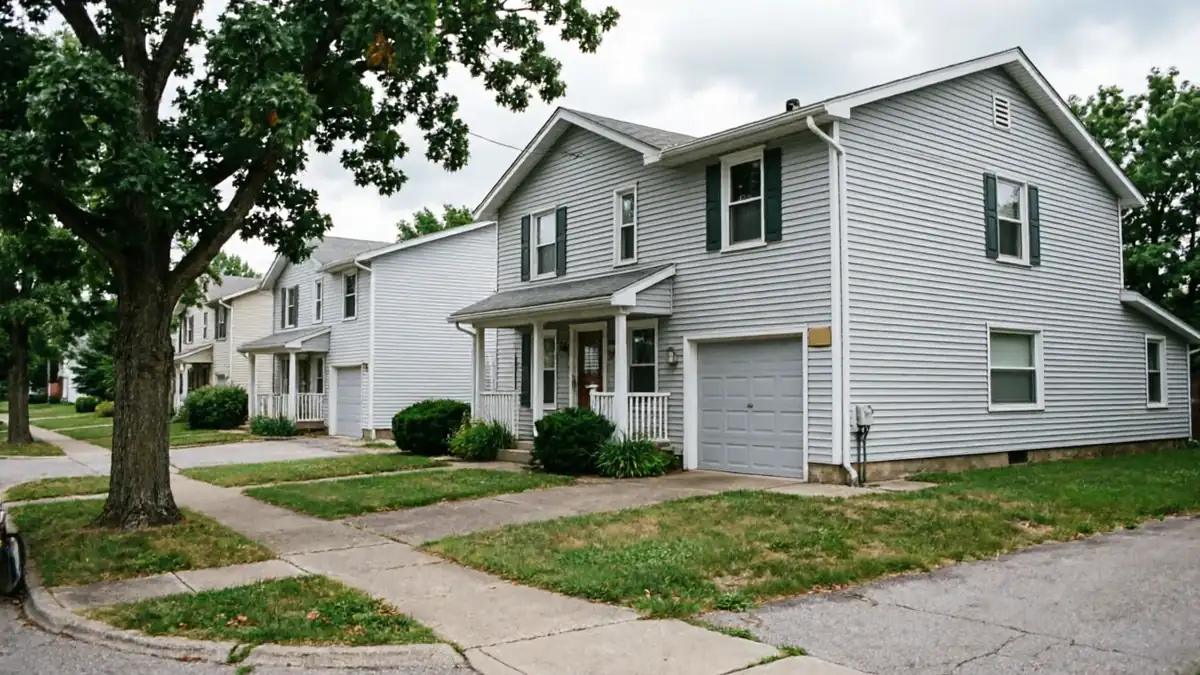
Most of the housing stock in this service area went up between 1946 and 2009, with the bulk of it dating to the 1980s and 90s across the 57 named areas we cover. That window matters for cables because it's when galvanized aircraft cable on standard lift drums became the default setup, and thirty-plus years later, a lot of that original cable is still on the door. Add in a COLD severe climate band, and you get a specific failure pattern: the steel cable contracts in deep cold, the drum grooves wear unevenly from decades of use, and the strands start to fray right where the cable wraps the bottom bracket. In a mild climate, that same cable might limp along another five years. Here, a cold snap is often what finally snaps a cable that's been fraying quietly all fall. We see this across the service area regardless of whether the house is 1950s original or a 1990s build, because the cable itself rarely gets replaced on its own schedule - it just gets replaced when it breaks.
Doing It Yourself
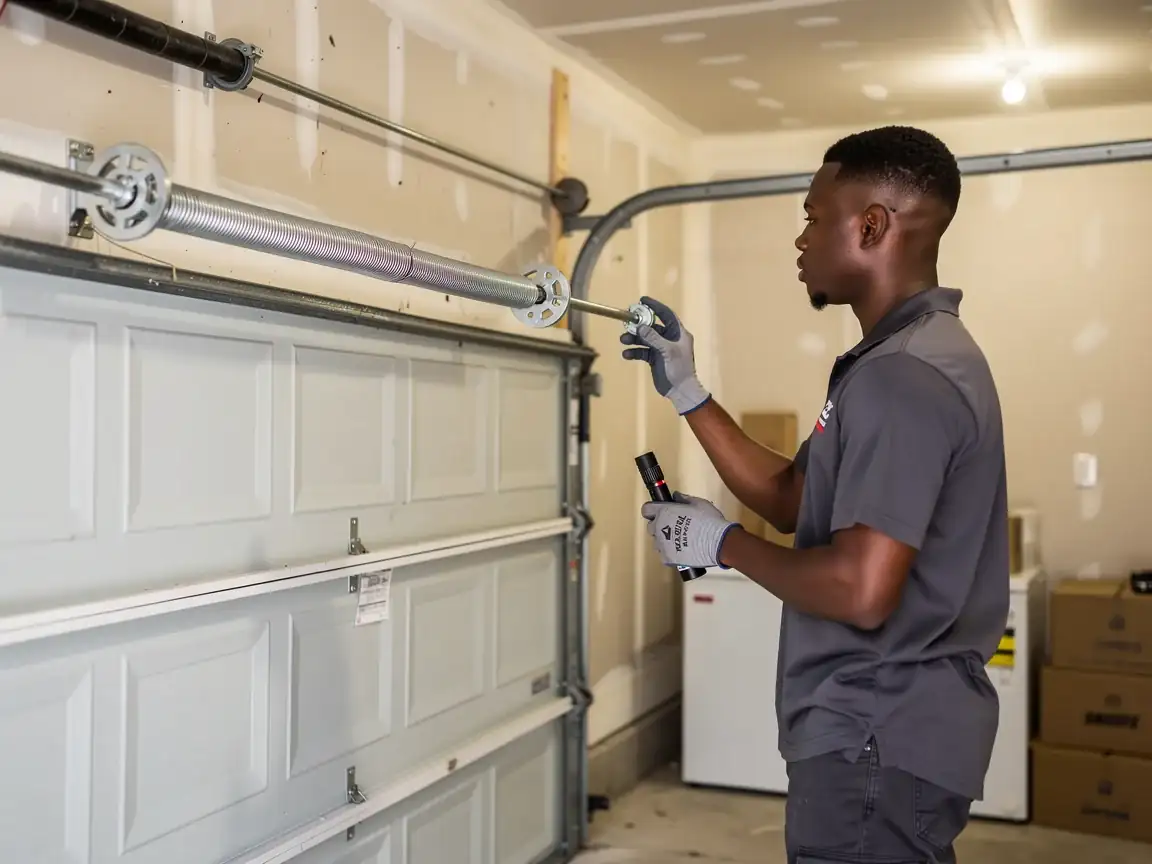
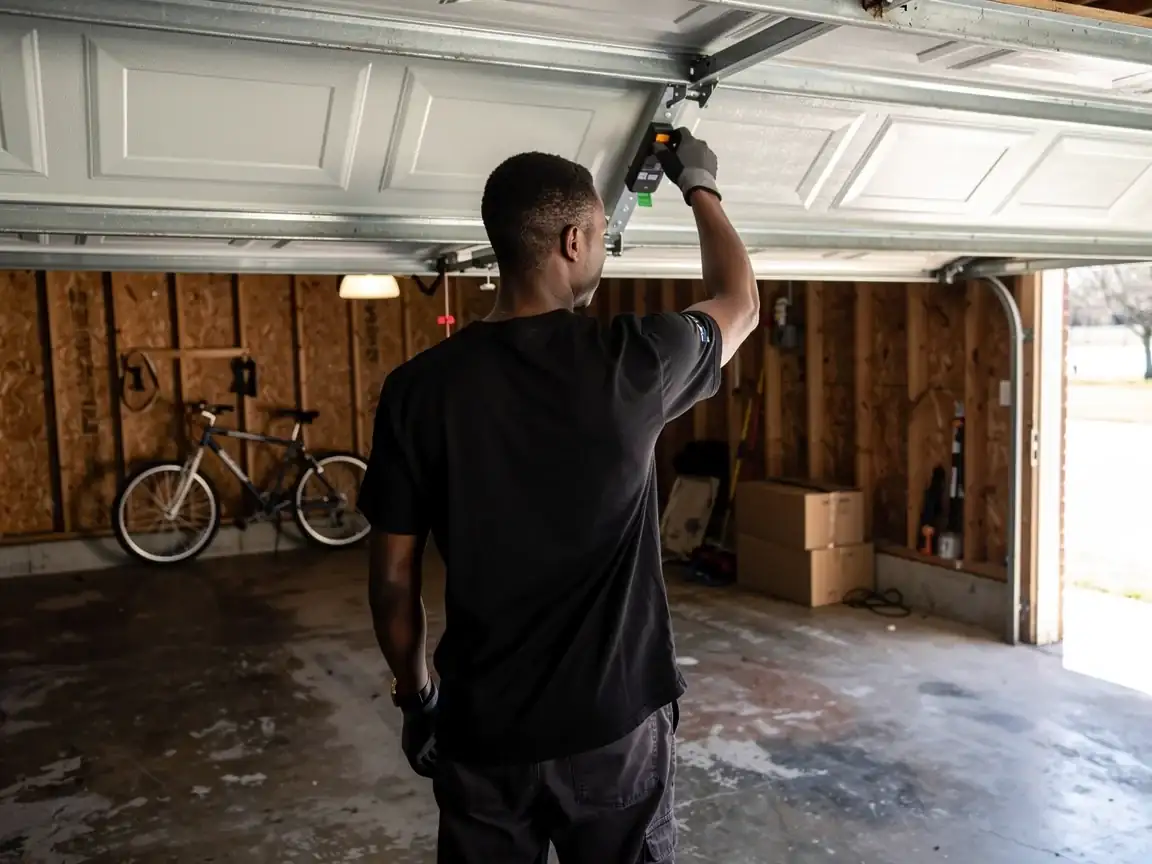
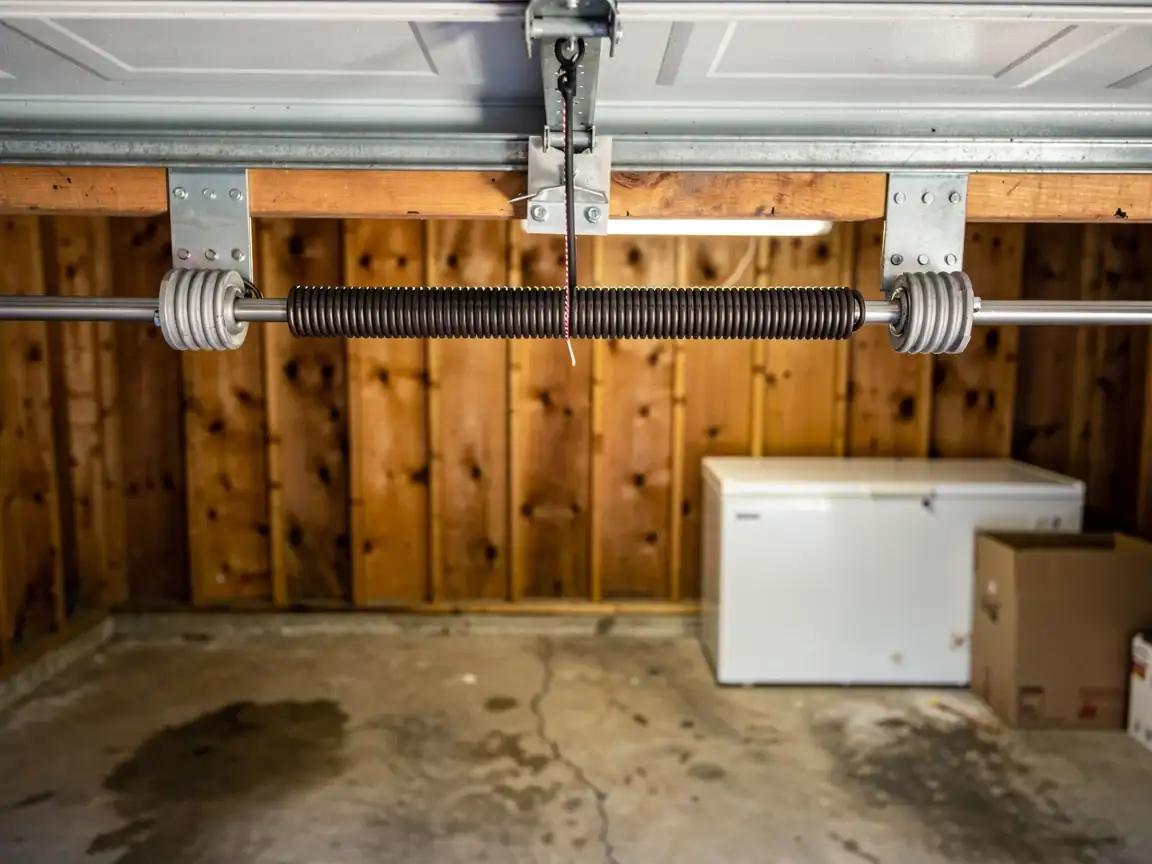
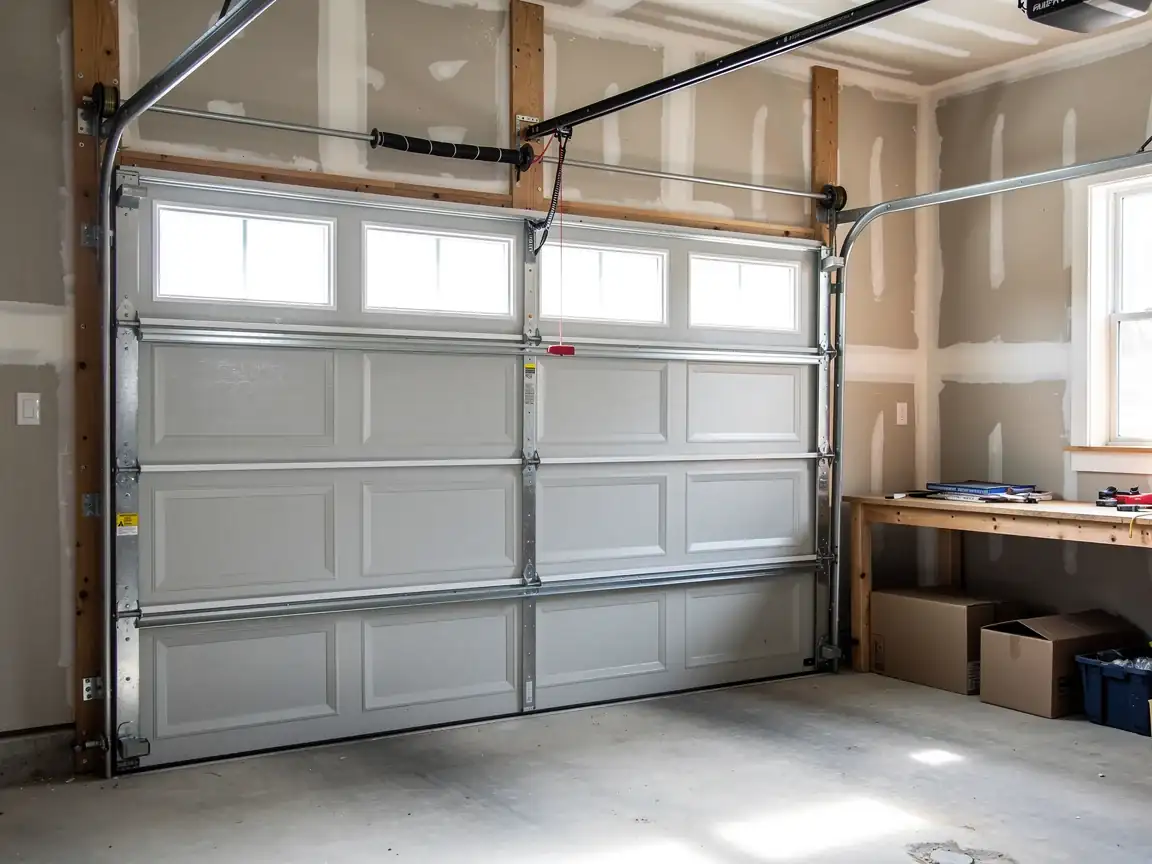
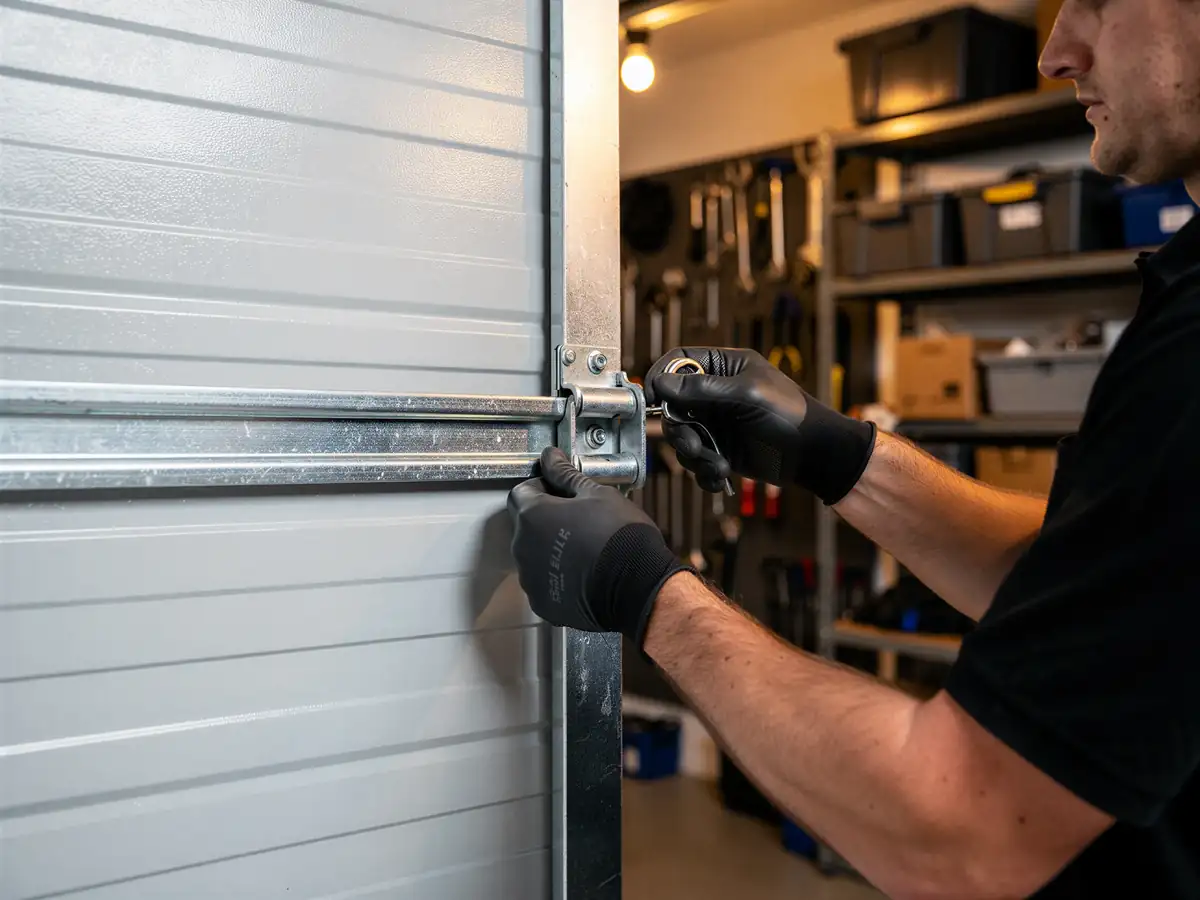
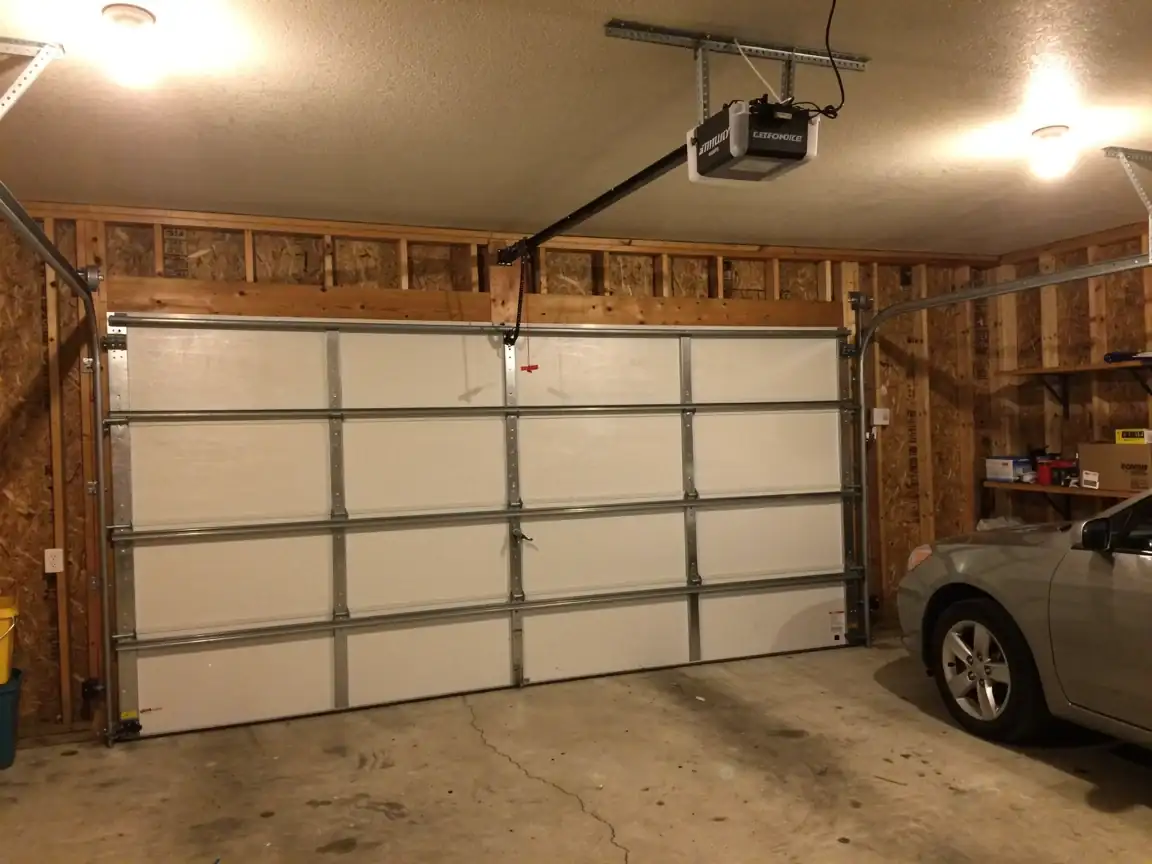
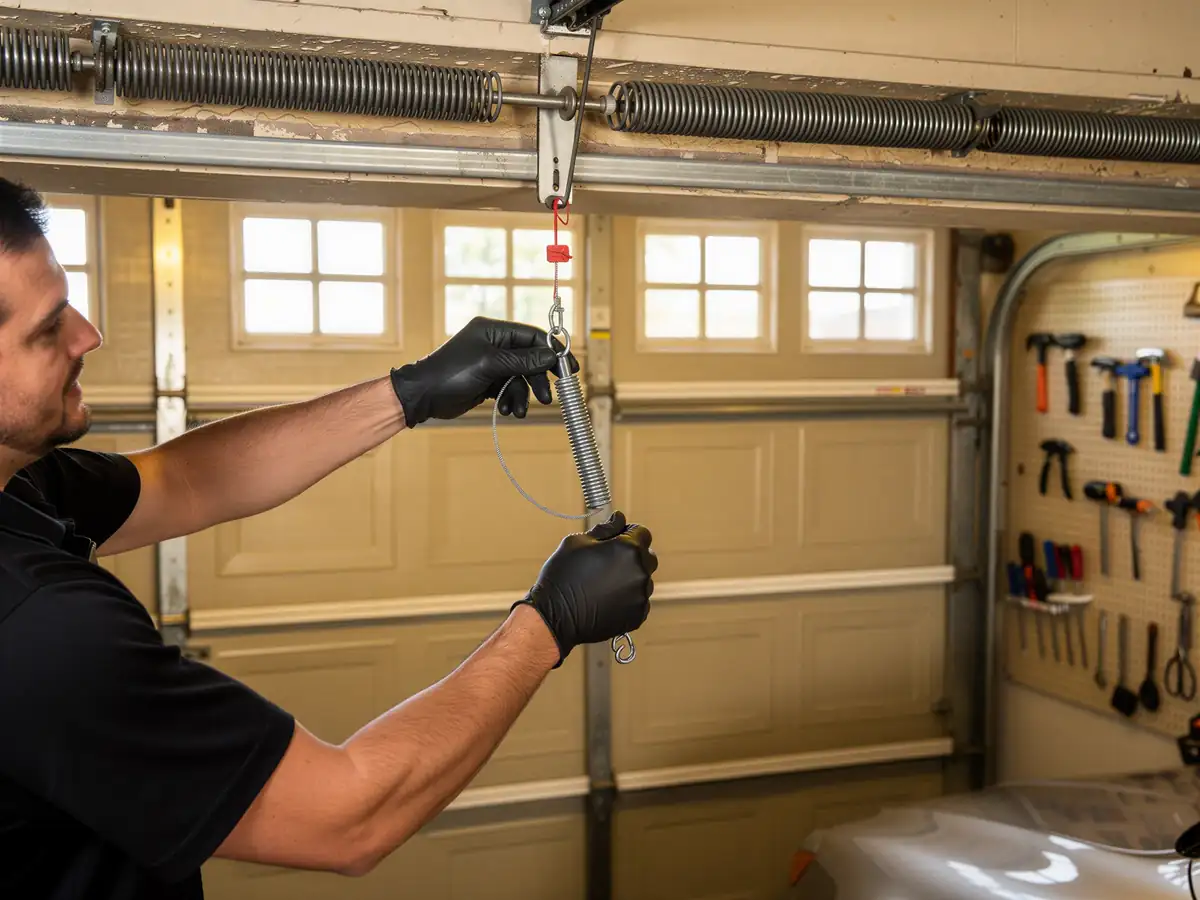
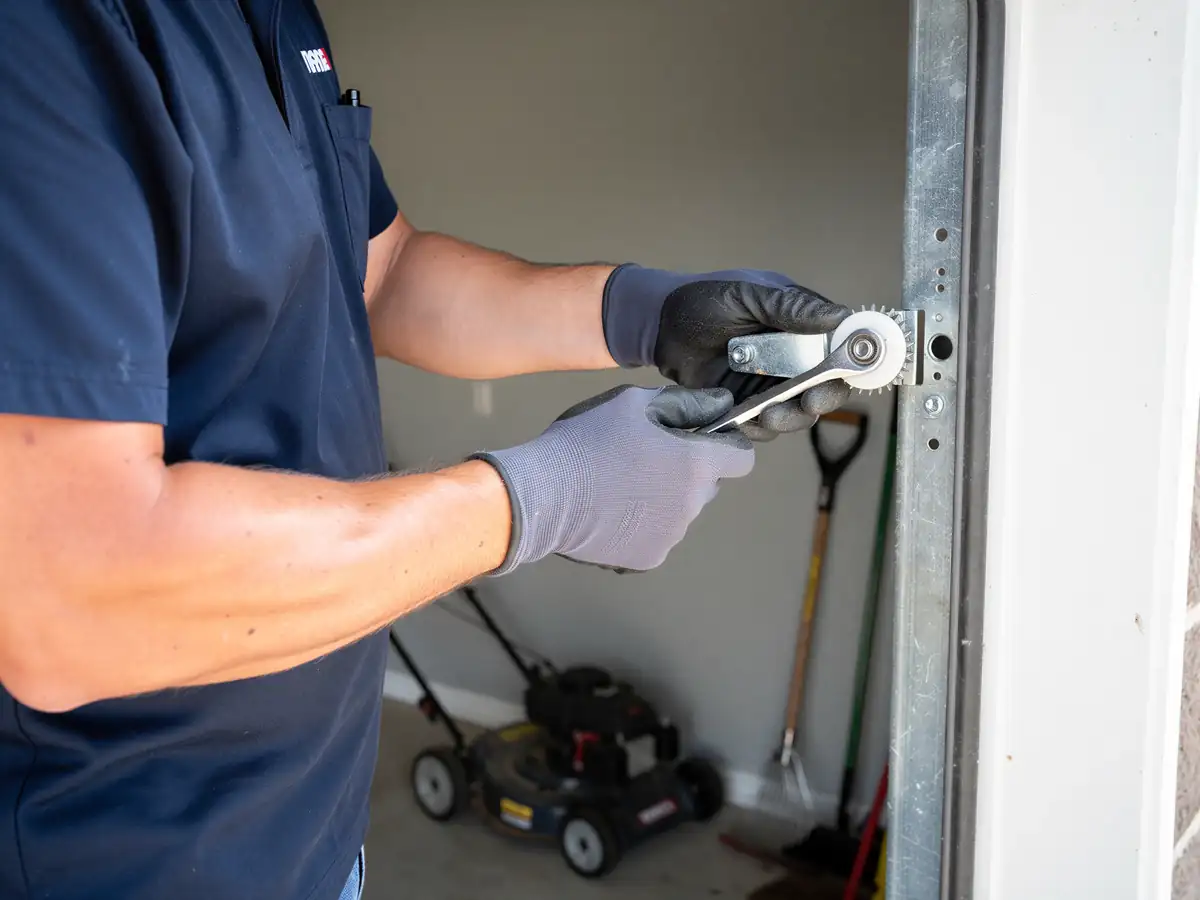
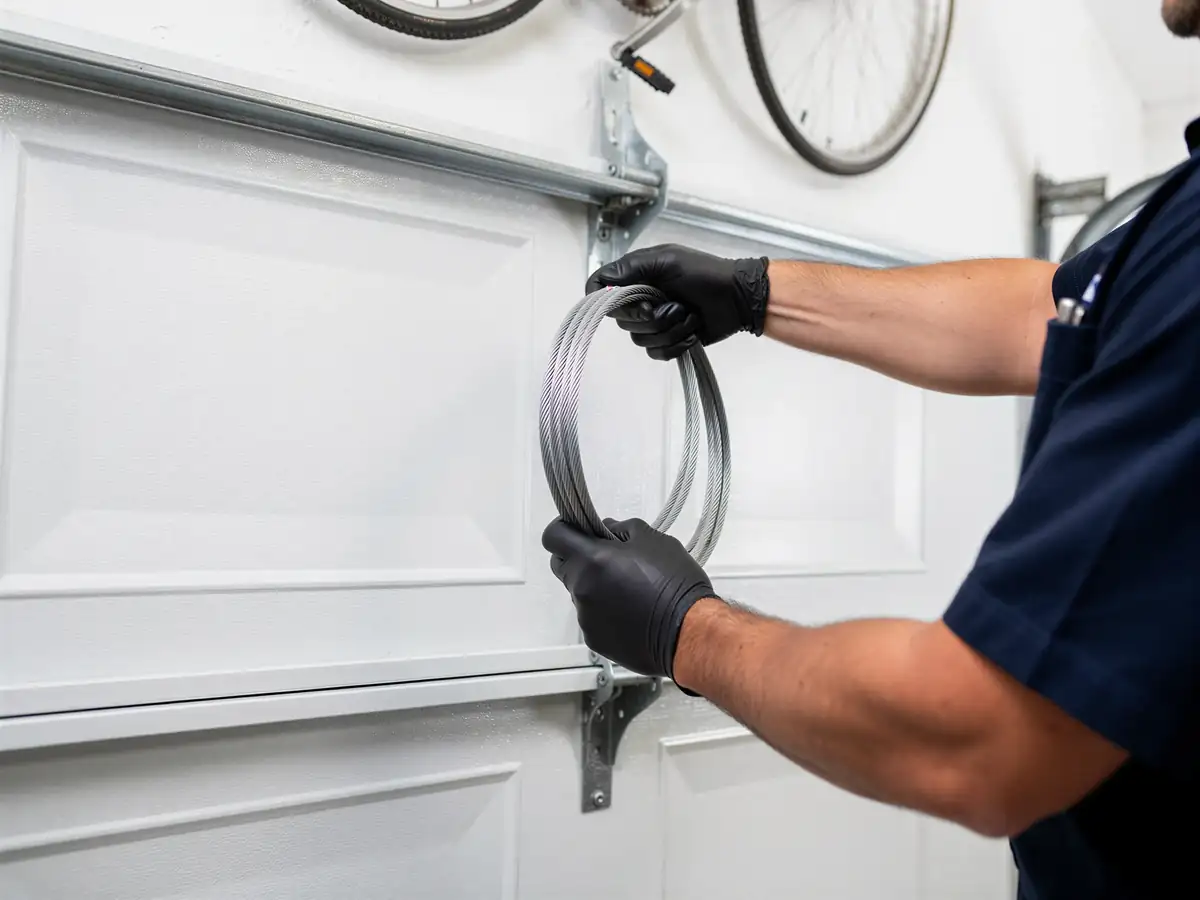
A frayed cable is not a safe DIY job, and we'll say that plainly. The door panel is under spring tension even when the cable looks slack, and a cable that lets go while someone's hands are near the drum or the bottom bracket can cause a real injury. What you can safely do yourself is look: walk out to the garage, raise the door partway with the opener disconnected (pull the manual release), and check the cable where it wraps the drum at the top and the bracket at the bottom. Fraying, rust bloom, or a few broken strands sticking out means the cable is near the end of its life, not the start of a new problem. If you see that, stop opening and closing the door and call. What we don't recommend is loosening the drum set screws or trying to re-tension a loose cable yourself - that's spring-adjacent work, and it's the kind of thing that turns a cable repair into an ER visit.
How It Shows Up
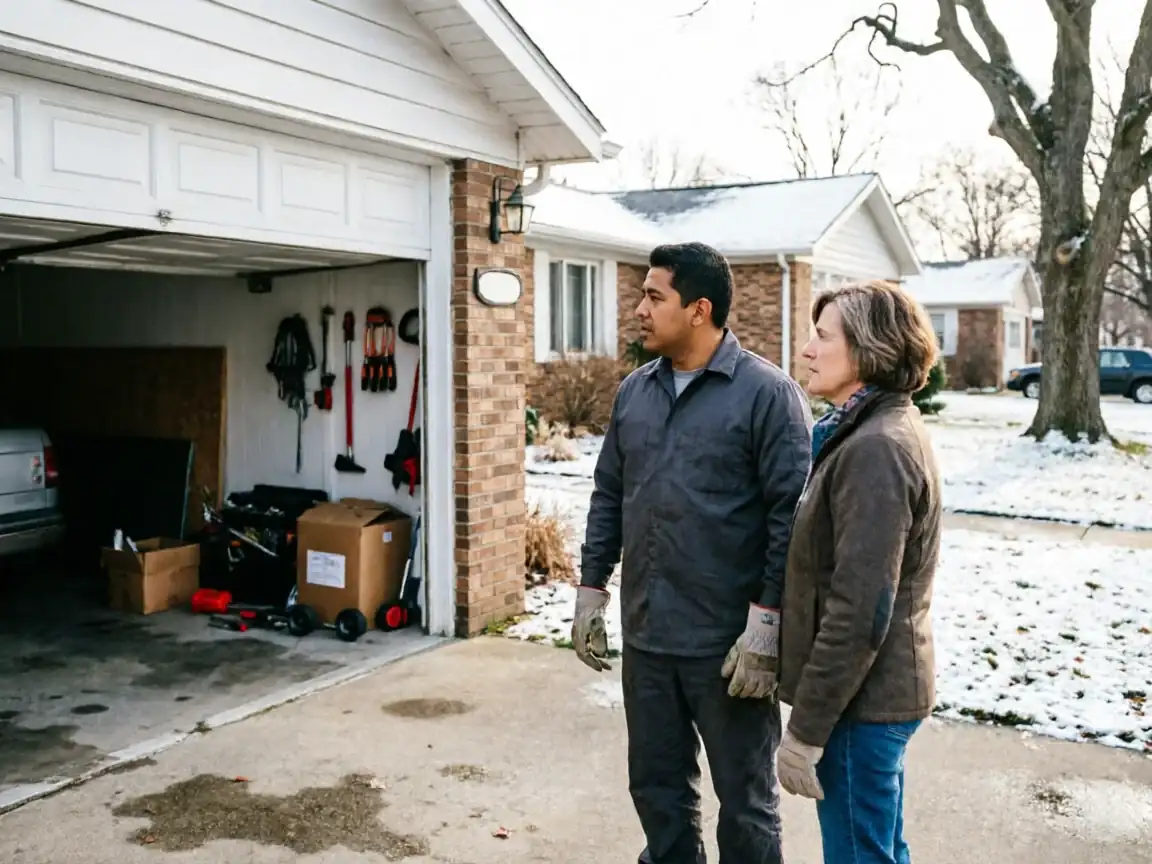
Most homeowners notice a cable problem before it fully breaks, if they know what to look for. A door that suddenly hangs crooked, tilts a couple inches to one side, or makes a snapping or popping sound mid-cycle is usually a cable starting to go, not the opener. Some people also hear a scraping or grinding sound near the top corners of the door frame - that's often a cable that's slipped off the drum and is rubbing metal on metal. Across the households we serve, this tends to show up more in late fall and deep winter, which lines up with the COLD severe climate this area sits in - steel cable loses a little flexibility in the cold, and a cable already weakened by age and use is more likely to fail on a cold morning than a mild one. If your door has started doing any of this, it's worth a call before the cable lets go entirely.