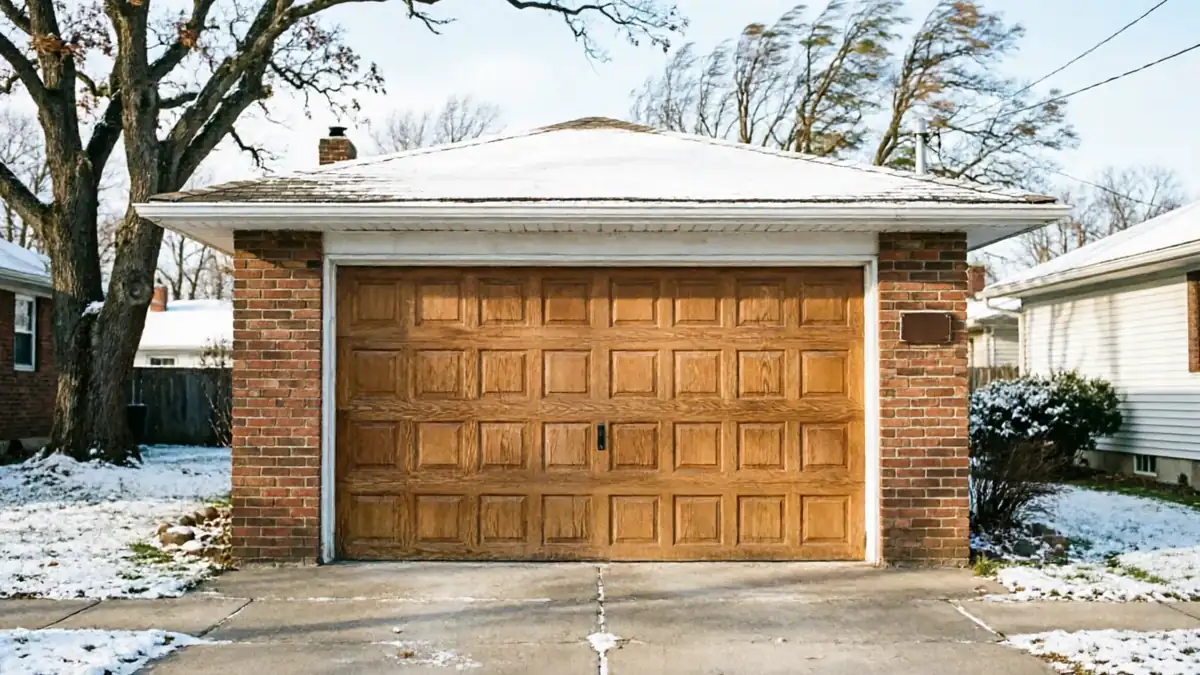
When It Stops Being a DIY Job
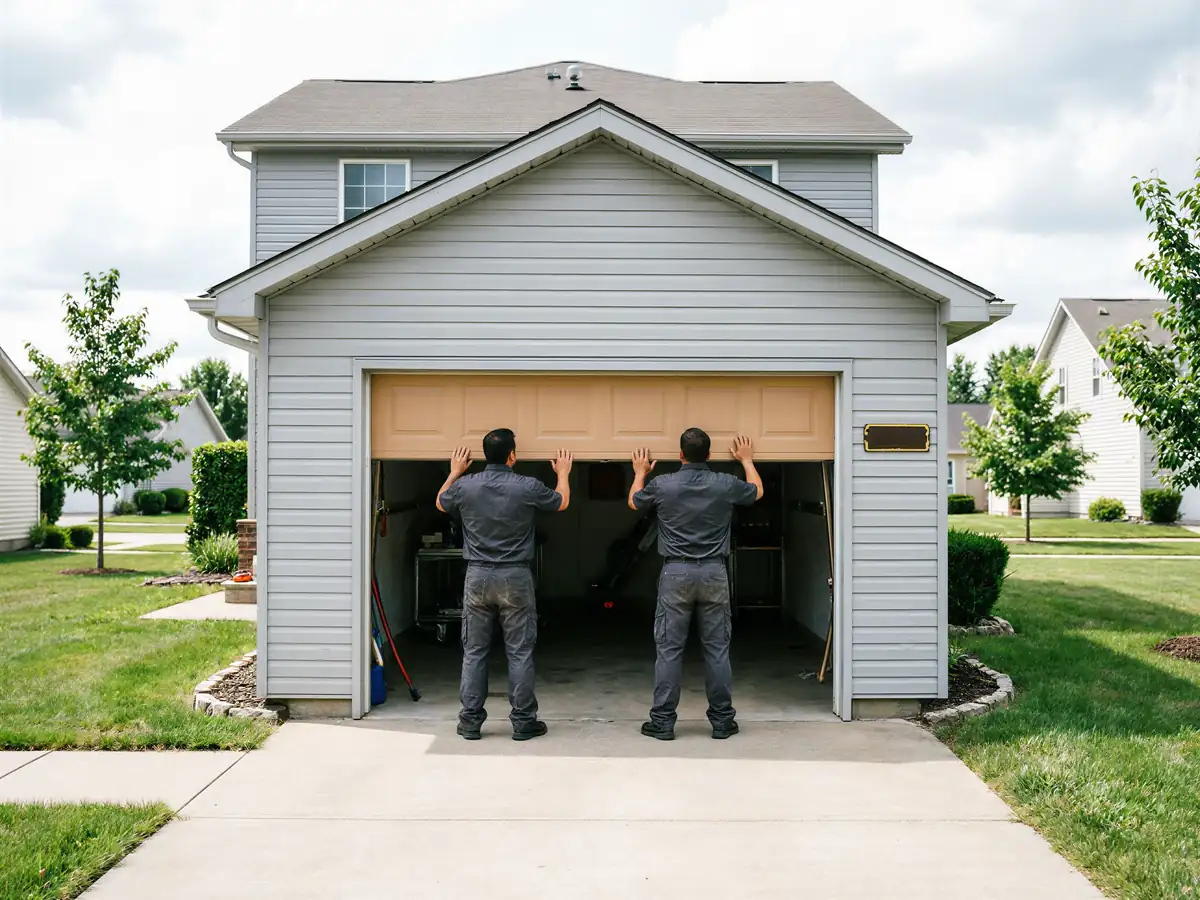
A single garage door shrugs off wind that a double door won't. The math is simple: more surface area means more force pushing on the same track width, and most of McHenry's housing went up between 1946 and 2009 with a median build year of 1987 - the decade when builders leaned hard into the two-car, double-wide layout. That panel width is great for parking two cars side by side. It's also the first thing to show stress when a gust catches it broadside.
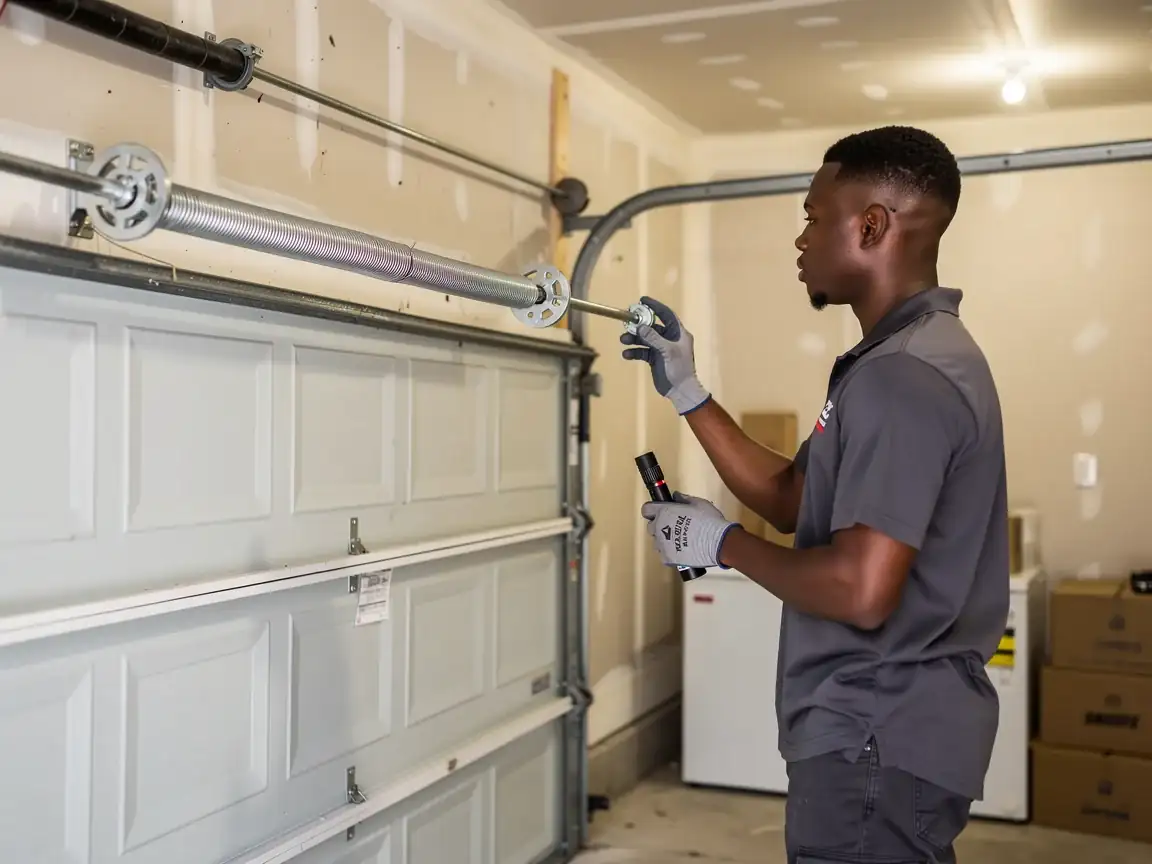
If you're hearing the door rattle in the track during wind, or you see daylight flex at the top panel when a gust hits, that's your cue to stop tightening bolts yourself and call it in. A bowed track or a bent top section on a wide door usually means the rollers are riding off-center, and forcing the opener to run it anyway just chews up the opener's drive gear along with the track. That's a job for a torsion bar and a level, not a Saturday afternoon with a ratchet.
Where it's still a DIY job: loose hinge bolts, a dragging weatherstrip, a noisy roller that just needs lubricant. Those don't involve the door's structural response to wind load and don't require resetting track alignment.
What Local Conditions Do
McHenry sits in a cold-severe climate band, and cold does something specific to a wide door that it doesn't do to a narrow one: it stiffens the steel and makes the panels less able to flex and recover. A double door already has more unsupported span between the vertical tracks than a single door does. Add a cold snap that's hardened the steel, then a wind gust, and you get a door that doesn't spring back the way it would on a mild October afternoon - it takes a set, and now it's permanently bowed a quarter inch out at the middle.
This matters more here than it would in a warm-climate service area, because the stiffening effect compounds with the width problem instead of one happening without the other. A single door in the same wind, same cold, flexes less to begin with and has less far to travel before it hits the stop. The double door is doing twice the work with the same gauge of steel most of the time, since most of the housing stock in this area dates to the 1980s and 90s when double-door openings became standard and steel gauges on production doors didn't necessarily scale up to match.
Where People Go Wrong
The most common mistake we see on wide doors
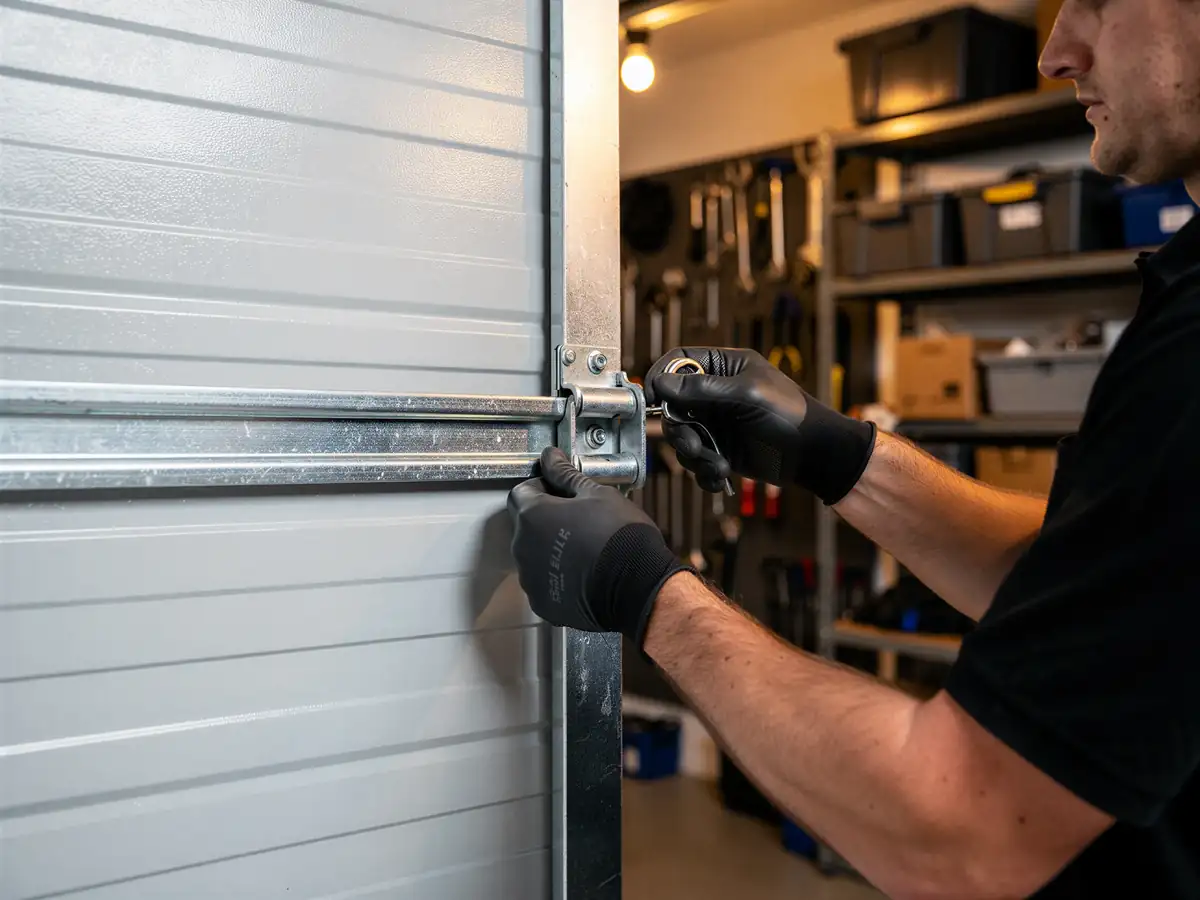
People reinforce the middle of the door with a strut kit and call it solved, without ever checking whether the track brackets are still anchored tight to framing that's 30 to 40 years old. A strut adds stiffness to the panel. It does nothing for a jamb bracket that's worked loose over three decades of seasonal wood movement, which is exactly the kind of age you'll find on houses built in the 1980s-90s wave that makes up most of this area's stock.
- 40 years
The second mistake is ignoring the opener's force setting after a wind event
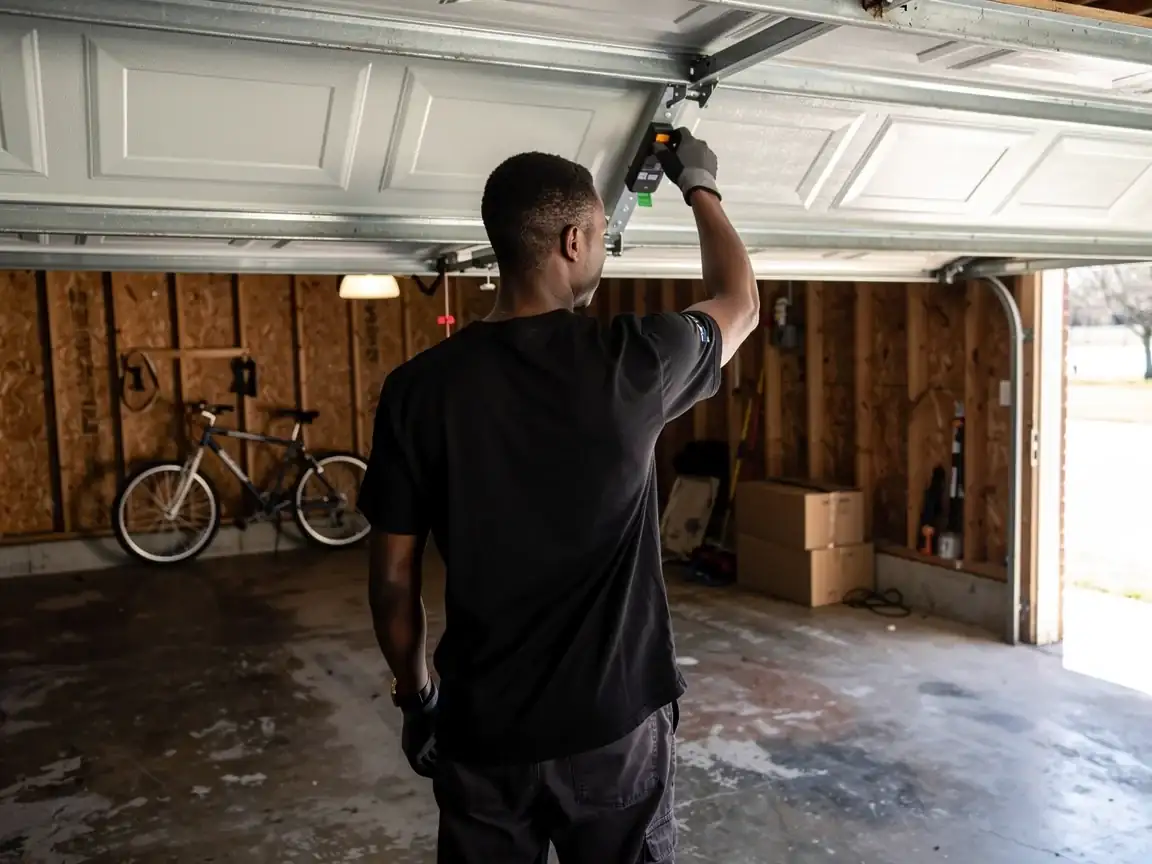
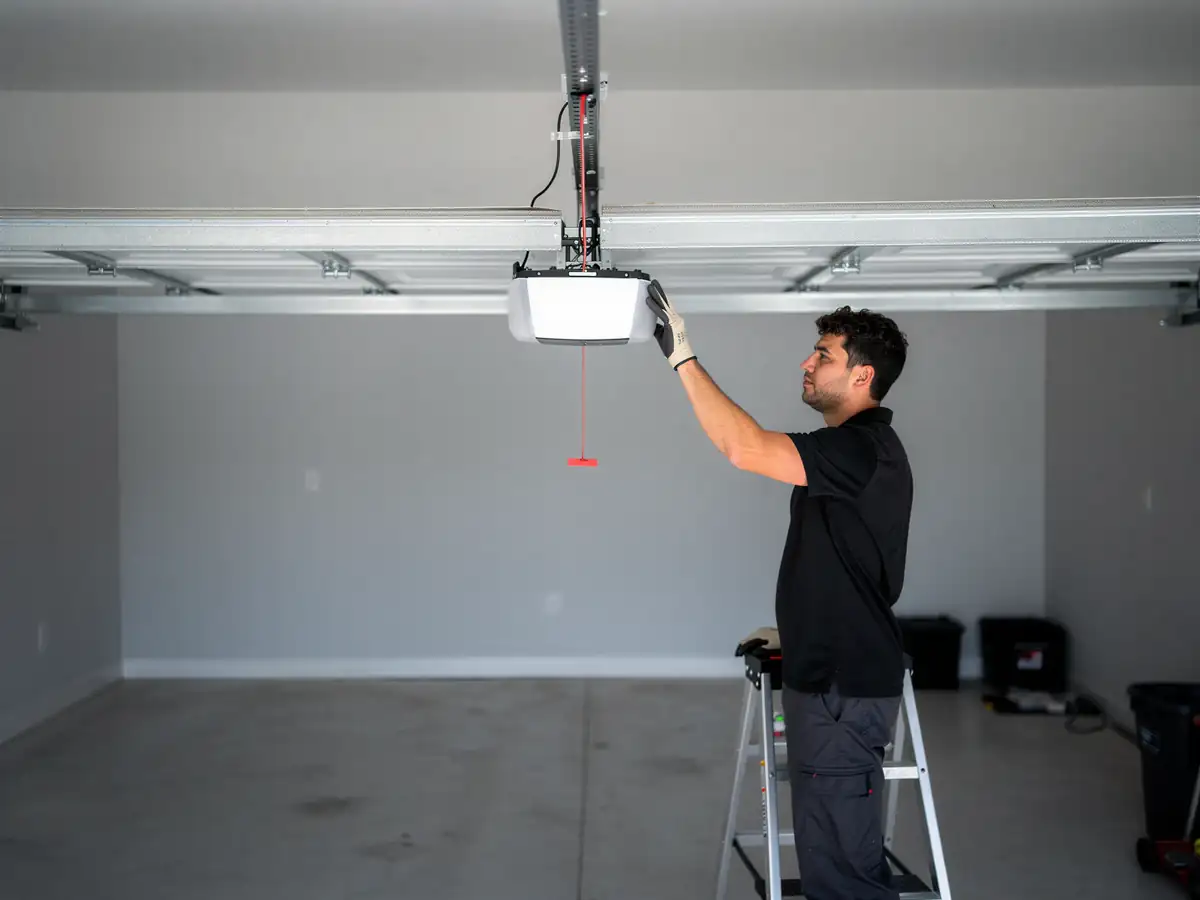
If a gust has pushed the door against its travel limits even once, the opener may have adjusted its down-force to compensate, and that setting doesn't reset itself back to normal. Left alone, it over-tightens the door against the floor on every cycle afterward, which stresses the bottom panel and the cables long after the wind is gone.
We don't recommend wind-rated retrofit kits as a blanket fix without someone actually putting eyes on the track and bracket condition first
A kit installed over compromised hardware is a wasted part.
The Situation
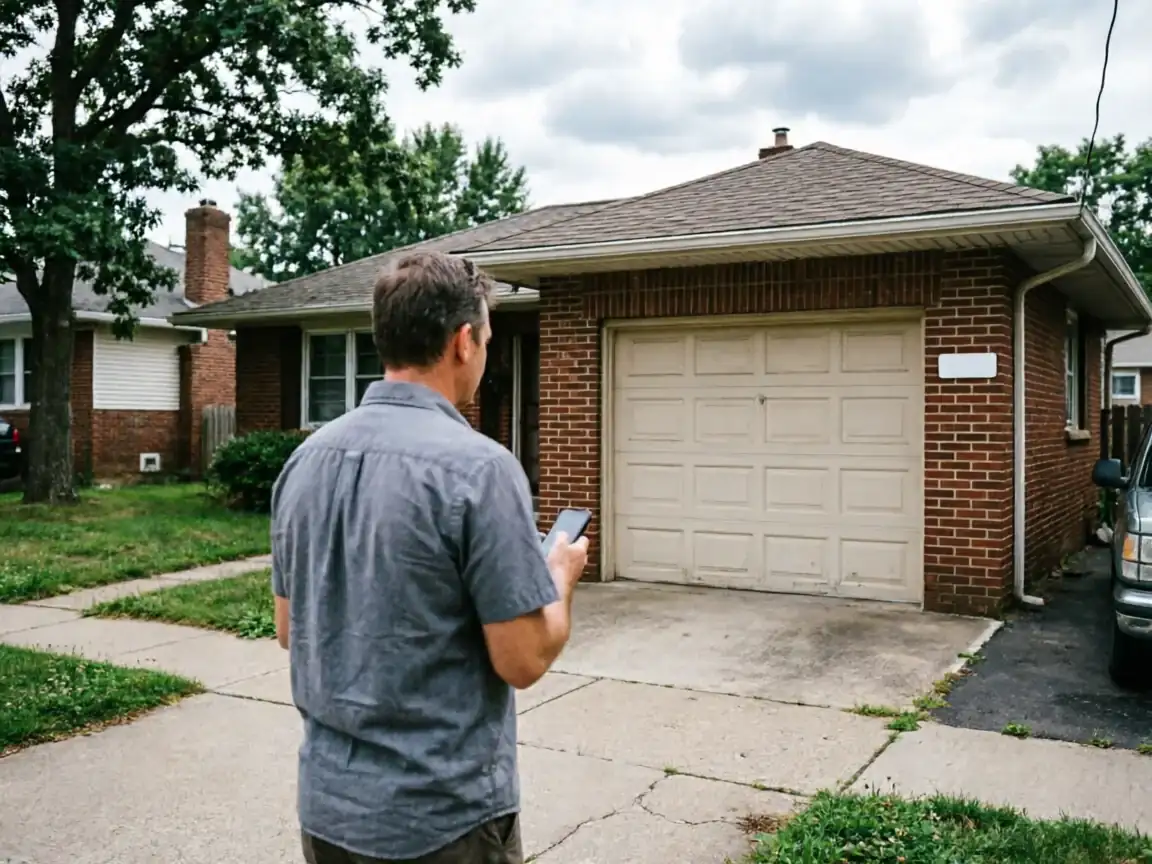
McHenry's housing dates mostly from 1946 to 2009, with the bulk of it going up in the 1980s and 90s across the named subdivisions in this corner of McHenry County - the kind of era that standardized the double-wide garage door as a default, not an upgrade. That's the housing stock we work on most, and it's also the housing stock most exposed to this problem, because those doors were built to the specs and wind expectations of their decade, not today's.
We work out of McHenry and cover the surrounding area, including towns like Johnsburg, Ringwood, Prairie Grove, and Wonder Lake a few miles out, and Woodstock and Fox Lake a bit further. If your door is a double-wide from that build era and it's been through a rough wind event, get the track and brackets checked before you run it through another season.